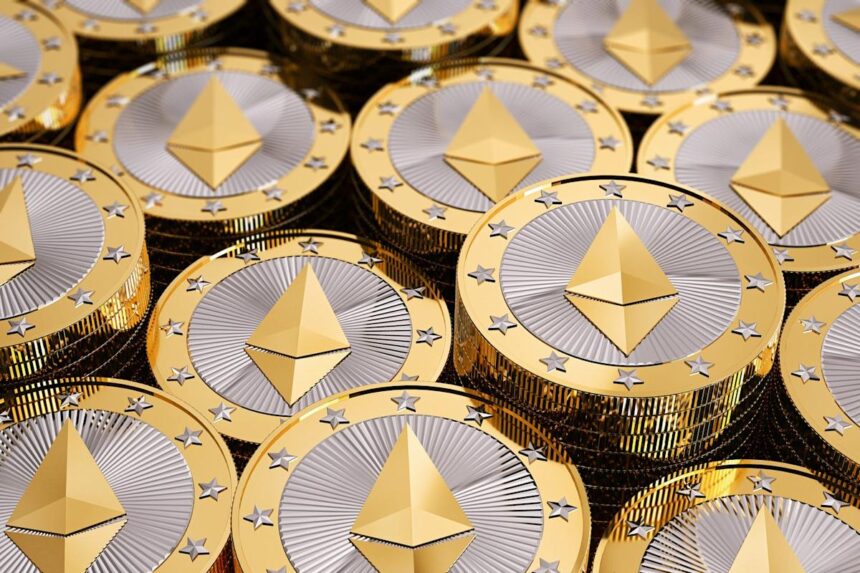
Bitcoin (BTC) and Ethereum (ETH) have experienced significant declines this year, both dropping about 40%. Investor sentiment has been dampened by concerns over potential rate hikes, geopolitical tensions, and other macroeconomic challenges. Additionally, large initial public offerings (IPOs), such as SpaceX, have diverted interest away from the cryptocurrency market.
Despite the current downturn, both Bitcoin and Ethereum are considered solid long-term investments. Bitcoin has traditionally served as a hedge against expansionary monetary policies, while Ethereum remains the leading blockchain for developers. However, there is a growing sentiment that Ethereum is the more promising investment at this time for several key reasons.
One of the main advantages of investing in Ethereum is the ability to stake Ether on its blockchain for interest-like rewards. Currently, staked Ether can yield 3%-4%, present compelling returns compared to traditional financial products such as certificates of deposit (CDs), high-yield savings accounts, U.S. Treasury bills, and dividend stocks. This staking mechanism allows investors to earn while weathering market volatility—a feature not available to Bitcoin investors, who do not have the option to stake on its blockchain. As a result, Bitmine, the largest corporate holder of Ether, has reportedly staked the majority of its 5.54 million tokens.
Another tier of Ethereum’s superiority lies in its smart contract functionality. While Bitcoin operates on a proof-of-work (PoW) model, requiring specialized mining equipment, Ethereum has transitioned to a proof-of-stake (PoS) blockchain since 2022. This shift allows for the development of decentralized applications and other crypto assets via smart contracts. As of late 2025, Ethereum boasted almost 32,000 active developers, far surpassing rival PoS blockchains like Solana and Cardano. Increased network activity leads to the burning of a portion of Ether used in transactions, thereby tightening supply and enhancing potential value. For those optimistic about the growth of decentralized applications on Ethereum, accumulating Ether appears to be a prudent strategy.
Moreover, Ethereum continues to evolve with plans to introduce Layer-2 (L2) networks to increase transaction speed and efficiency. Upcoming upgrades—dubbed The Verge, The Purge, and The Splurge—aim to tackle issues such as network congestion and gas fees over the next ten years. While Ethereum is actively pursuing innovation and growth, Bitcoin’s blockchain is likely to remain static, reliant on diminishing mining supply.
Given these factors, if one were to choose between investing in Ether or Bitcoin today, many advocates suggest greater investment into Ethereum due to its ongoing expansion and potential for innovative developments.
However, it’s important to note that investing in Ethereum should be approached with caution. While there are compelling reasons to consider Ether, notable financial advisory services have recently identified other stocks that may offer better long-term growth potential. Investors are encouraged to carefully review their options and consider diverse opportunities that align with their financial goals.