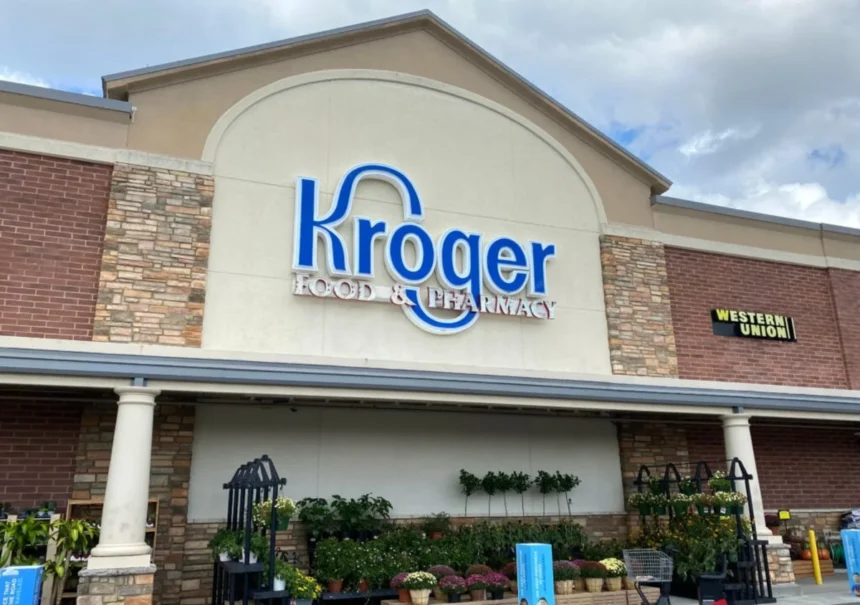
Investors interested in The Kroger Co. are currently focusing on the supermarket chain’s dividend yield as they anticipate the company’s first-quarter earnings report on June 18. With an annual dividend yield of 2.18%, Kroger is offering a quarterly dividend of 35 cents per share, which translates to a yearly total of $1.40 per share.
To achieve a monthly income of $500 from dividends, an investor would need to set a yearly goal of $6,000, calculated by multiplying the desired monthly earnings by 12 months. This means they would require approximately 4,286 shares of Kroger, resulting in a total investment of about $274,818.
For those aiming for a more conservative target of $100 per month, amounting to $1,200 annually, the same calculations reveal the need for roughly 857 shares. This represents a total investment of approximately $54,951.
It is essential for investors to be aware that dividend yields can fluctuate based on various market factors, primarily the stock price and the company’s dividend payments. The yield is determined by taking the annual dividend payment and dividing it by the current stock price. For example, if a stock’s annual dividend is $2 and trades at $50, the yield stands at 4%. However, if the stock appreciates to $60, the yield falls to 3.33%. Conversely, a drop in stock price to $40 raises the yield to 5%.
The dividend payment itself can also adjust over time, impacting the yield. An increase in dividend payouts raises the yield, even if the stock price remains stable, while a decrease reduces it.
Beyond dividend investing, there are various avenues for individuals looking to build wealth. Many investors view diversification as a key to managing risk and ensuring steady returns. This approach allows individuals to create a resilient portfolio that does not rely solely on one asset or market trend.
Several platforms offer opportunities beyond stocks, including access to real estate, fixed-income investments, precious metals, and self-directed retirement accounts. For instance, Arrived Homes enables investors to purchase fractional shares in single-family rentals and vacation homes, starting at just $100. This lowers the barrier to entry for real estate investing and allows diversification without the complexities of property management.
Similarly, companies like Immersed are innovating in the tech space, focusing on augmented and virtual reality to enhance productivity in remote work environments. With over 1.5 million users, Immersed is well-positioned at the intersection of next-generation computing and remote collaboration.
Investment options such as Vinovest allow individuals to invest in fine wine and rare whiskey, while EnergyX is enhancing lithium extraction for cleaner energy solutions. FarmTogether offers access to farmland investment, historically known for its value stability, while platforms like EquityMultiple and Fundrise provide avenues for commercial real estate and private credit investments.
Finally, American Hartford Gold offers services for purchasing precious metals, and Mode Mobile reshapes smartphone interaction by rewarding users for their engagement with applications.
In conclusion, Kroger’s dividends present a potential avenue for income, but investors have a myriad of options available to diversify their portfolios, manage risk, and build long-term wealth across various asset classes.