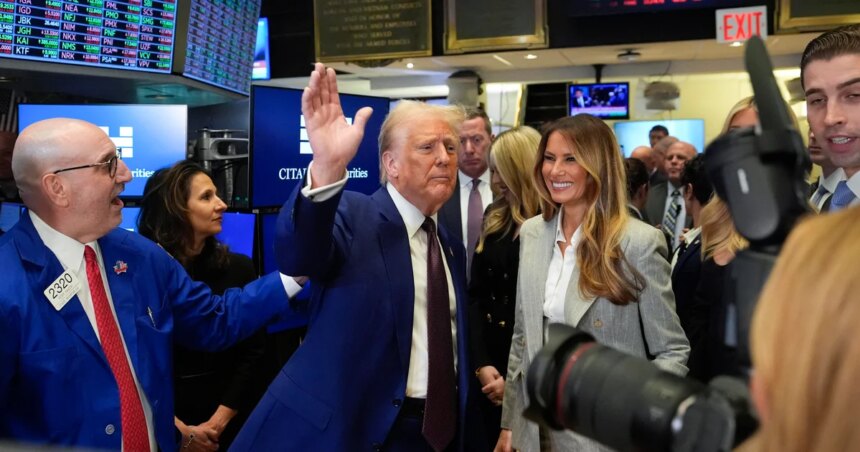
In an unprecedented display of financial activity, President Trump’s investment accounts traded between $212 million and $695 million in stocks and securities during the first quarter of 2026. CBS News has accessed and analyzed the president’s recent financial disclosure, revealing that these accounts executed a staggering 2,346 purchases and 1,296 sales from January 6 to March 30.
The sheer volume and timing of these trades have raised eyebrows among ethics experts and congressional Democrats, fueling allegations of potential insider trading. Senator Elizabeth Warren from Massachusetts is among those calling for an investigation into the president’s trading practices, suggesting they may exploit his position for personal gain.
Investment professionals brought in to analyze the transactions suggested that the activity is indicative of tax strategies, such as tax-loss harvesting, rather than insider trading. They pointed out that the volume of trades is unusual compared to typical practices in wealth management. The Trump Organization has emphasized that the president and his family do not manage the portfolio and that all trades are overseen by independent third-party managers.
CBS News’ analysis of the financial disclosure, which the president signed on May 8, 2026, indicates that his accounts conducted 3,642 transactions involving 1,026 different firms and funds. Technology giants like Microsoft, Amazon, Meta, Netflix, and AMD were among the most frequently traded, with total stock purchases ranging from $126 million to $399 million, while sales totaled between $86 million and $296 million. The majority of trades fell within the range of $15,001 to $50,000.
There were notable spikes in trading activities, particularly in February and March. For instance, on February 10, the president’s accounts sold large quantities of Microsoft, Amazon, and Meta stock, each valued between $5,000,001 and $25,000,000. This trend was accompanied by a massive increase in buying activity in March, culminating with 283 purchases made on a single day, March 23.
Analysts have also observed that some of the trades coincided with significant government actions or statements by the president, adding to the scrutiny. For example, a substantial purchase of Nvidia stock occurred on January 6, 2026, shortly before the administration relaxed export controls on the company’s AI chips. Similarly, purchases in Palantir stock closely followed public commendations by the president on social media.
While the president’s legal ability to engage in stock trading remains subject to little direct regulation, the ethical implications of such activities — especially concerning potential conflicts of interest — have raised significant concerns. With Trump declining to create a blind trust for his assets, critics argue that he’s in a position to influence stock prices through policy decisions, creating a perceived risk for corruption.
Various proposals to mitigate such risks have surfaced in Congress, including the Restoring Trust in Public Servants Act, which seeks to prevent government officials from owning or trading stocks. Bipartisan support for these measures indicates a growing awareness and concern over the implications of active trading by high-ranking officials.
As the debate continues, the financial intricacies and ethical ramifications of President Trump’s investment activities remain a focal point of national interest.