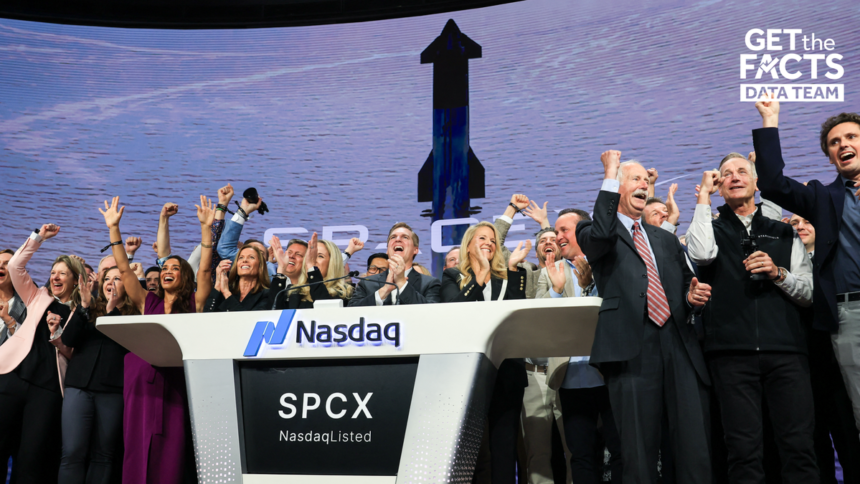
In a groundbreaking move for the financial and aerospace sectors, SpaceX has raised an astounding $85.7 billion in its initial public offering (IPO), marking the largest IPO in history. The company, founded by billionaire entrepreneur Elon Musk, offered 555.56 million shares at a price of $135 each, initially predicting a total raise of $75 billion. However, this figure increased significantly after underwriters opted to exercise the greenshoe option, allowing them to purchase additional shares and boosting the total raised to $85.7 billion.
An IPO represents a critical milestone for any company, as it is the first occasion that shares of capital stock are made available to the general public. As mandated by U.S. federal securities laws, companies must register the sale of shares with the Securities and Exchange Commission (SEC), unless they qualify for a specific exemption. The enormity of SpaceX’s offering eclipses past records among top tech stocks. For context, Meta, formerly known as Facebook, raised $16 billion during its IPO in 2012, while AT&T seized the largest IPO title at the time by raising $10.6 billion in 2000.
As of the latest updates, SpaceX has attained a remarkable market capitalization of $2.1 trillion, elevating it to the status of the sixth-largest company in the United States. This market cap represents the total value of a company’s outstanding shares and serves as a barometer for its financial worth. Interestingly, only about 4% of SpaceX’s shares are now available to public investors, with the overwhelming majority—96%—remaining under the control of Musk, early investors, and SpaceX employees.
Following the commencement of trading, Musk officially reached a new financial milestone, being recognized as the world’s first trillionaire. This achievement was solidified just as SpaceX entered public trading on Friday, highlighting both the meteoric rise of the aerospace sector and Musk’s monumental impact on the industry.
With such a historical IPO, SpaceX not only redefines the landscape of initial offerings but also sets new benchmarks for future companies looking to go public.