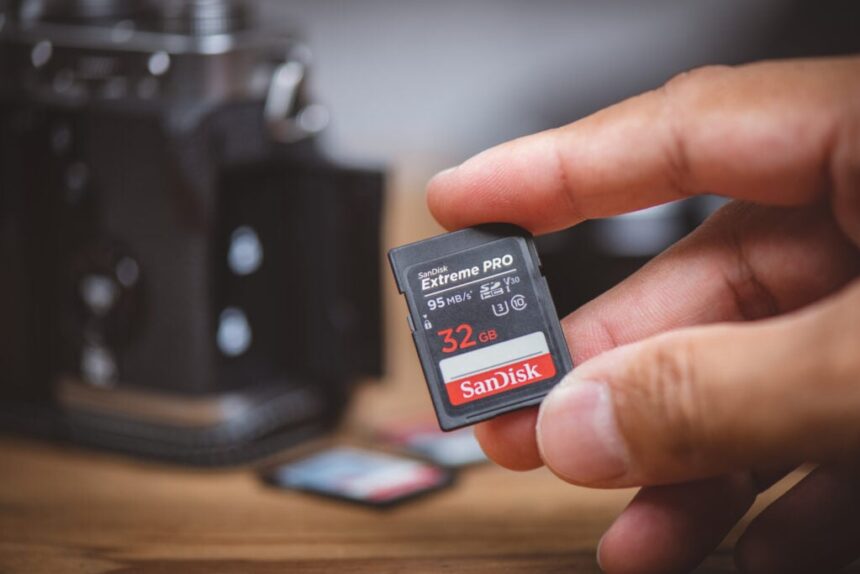
SanDisk’s stock has experienced a remarkable resurgence, surging to record highs recently after a significant low in April 2025. The stock, which previously bottomed at $27.89, soared nearly 6% on a recent Monday, nearing $2,100, buoyed by a robust performance from its parent company, Western Digital, which surged 14% to set its own all-time high.
The notable rise in both stocks comes on the heels of multiple target increases from respected Wall Street firms for Western Digital, which prompted a wider rally across the storage sector. Major financial institutions such as JPMorgan, Wells Fargo, and Bank of America have raised their price targets significantly, indicating a strong bullish sentiment that has reverberated throughout the industry.
In the last three trading sessions alone, SanDisk has rallied by 28%, marking its sharpest three-day gain since early January. This impressive momentum is largely driven by a pressing physical shortage of NAND flash memory, which is essential for data storage in devices ranging from smartphones and laptops to advanced AI data centers. SanDisk stands out as a leading supplier in this sector, providing enterprise solid-state drives that are critical for the functioning of AI infrastructures.
The dramatic surge in demand for NAND flash memory is evident, especially considering that training and running AI models consumes substantial amounts of this resource. Analysts, including those from Bank of America, predict that meaningful increases in supply will not materialize before 2028, leading to potential supply constraints in the future.
SanDisk has strategically positioned itself to capitalize on this shortage through long-term supply agreements, referred to as “new business models.” These contracts are designed to stabilize earnings by locking in prices over an initial period. In the latest quarter alone, the company secured contracts that guarantee a minimum revenue of $42 billion, with total agreements providing financial assurances exceeding $11 billion.
Accompanying these contracts is a stunning financial performance. Revenue for SanDisk soared by 251% in the quarter ending March, accompanied by a gross margin of 78%, signifying that only $22 of every $100 in sales goes to costs. Bank of America recently revised its fiscal 2027 revenue expectations for SanDisk to $44 billion from a previous estimate of $37.7 billion, projecting earnings per share to increase dramatically from $3 in fiscal 2025 to $188 in fiscal 2027—a staggering more than 60-fold increase over just two years.
Reiterating a Buy rating, BofA’s analyst raised its price objective for SanDisk from $1,550 to $2,100, while Mizuho and Cantor Fitzgerald set even higher targets of $2,200 and $2,900, respectively. Despite this significant increase in stock price, SanDisk continues to trade at approximately ten times its projected earnings for 2027, a multiple that supports Bank of America’s target.
However, the landscape for memory production remains cyclical. While there is currently a high demand for NAND flash memory compounding the stock’s record price, the potential for oversupply looms as new production capacities come online, particularly from Chinese competitors like Yangtze Memory Technologies Corp. Analysts highlight oversupply and international competition as major risks that could impact future pricing and demand.
As SanDisk’s stock continues its notable climb, the broader market remains watchful, questioning whether this trajectory can sustain without the kind of corrections typically seen following rapid growth in asset prices. The future of SanDisk now hinges on its ability to navigate this complex environment of contracts, memory shortages, and heightened earnings potential.