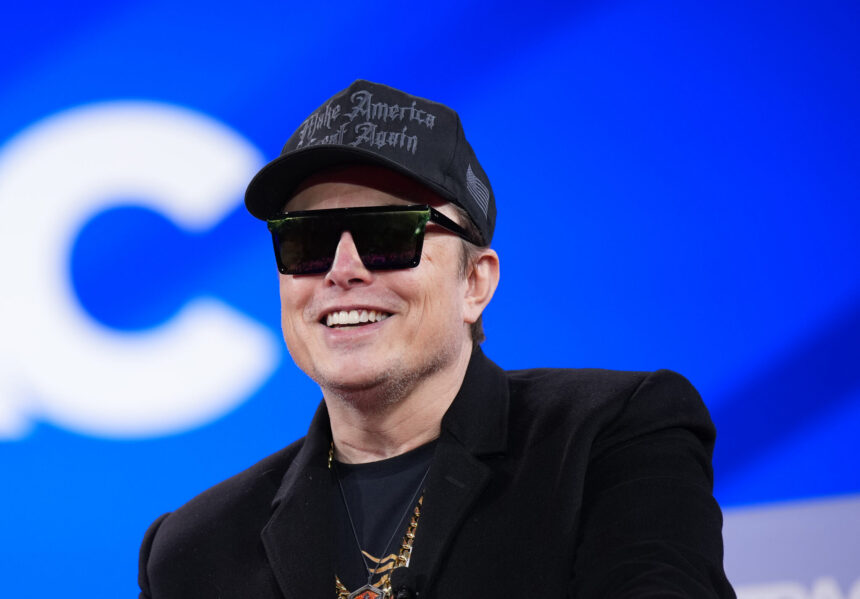
When SpaceX, Elon Musk’s rocket and artificial intelligence company, began trading on the stock market last week, it marked a significant milestone for both Musk and the financial landscape of the United States. This event not only made Musk the world’s first trillionaire but also highlighted a growing trend in wealth concentration that has accelerated since 2022.
As of the end of 2025, the wealthiest 1% of Americans held nearly one-third of the country’s total wealth—a staggering 31.9%. This figure represents the highest share recorded by the Federal Reserve Board since it began tracking such data in 1989, up from 22.5% in 1990. Economists suggest that the current distribution could be the most extreme since the end of World War II, potentially signaling a return to the extreme wealth disparity seen in the late 19th and early 20th centuries. Factors contributing to this widening gap include tax cuts and pro-business policies enacted during the Trump administration.
The elite top 1% comprises approximately 1.4 million households, each with net worths exceeding $12 million, collectively amassing $55.9 trillion in wealth. In stark contrast, the bottom 50%, which consists of around 67.7 million households, has a net worth of less than $264,000.
French economist Thomas Piketty has analyzed wealth trends in the United States and claims that the richest 1% controlled nearly half of the nation’s wealth just before the Great Depression in 1928–1929. He notes that their share declined during the mid-20th century, a period characterized by high marginal income tax rates and a general disdain for exorbitant executive salaries. Instead of funneling profits into the pockets of the wealthy, corporations invested in worker wages and business expansion.
However, Piketty points out that the concentration of wealth began rising again in the 1970s, arguing that the current policies enabling this increase are not natural but rather a result of political decisions. He warns that if the ultra-wealthy continue to influence state policies while paying minimal taxes, wealth accumulation will persist, despite history suggesting that such trends can reverse quickly.
In light of these economic dynamics, several states have taken action. Lawmakers in at least a dozen states, including Illinois and Virginia, have proposed new taxes targeting the wealthiest taxpayers. These proposals range from taxing high annual incomes to levying taxes on valuable capital assets. In California, plans are underway for a one-time tax on billionaires, a move propelled by the reality that the state’s billionaires hold approximately $2.3 trillion in combined wealth—potentially generating almost $101 billion from the proposed tax.
While some California billionaires have moved out of state, primarily due to high tax pressures, the influx of new wealth and residents has also resulted in the creation of numerous new billionaires within the state. Meanwhile, regions like Hawaii and the District of Columbia show the highest concentration of households with significant net worth.
Experts from various viewpoints agree that the current economic climate, spurred on by a booming stock market, disproportionately benefits the wealthy while leaving middle- and lower-income families struggling, particularly as inflation erodes wage increases. Proponents of wealth redistribution note that Trump’s tariffs and tax policies further exacerbate this issue, affecting lower-income and middle-class households far more than the wealthy.
Despite the acknowledgment that federal tax policies are progressive—redistributing wealth from high-income to low-income residents—critics highlight that overall tax revenue in the U.S. lags behind that of other wealthy nations. This raises concerns about income inequality, which persists partly due to the lower responsiveness of the U.S. tax system to the needs of its communities.
Through various analyses, it has become clear that inflation has created a divide in consumer spending power. The Federal Reserve’s Beige Book recently indicated that while higher-income households remain relatively unaffected by rising prices, middle- and lower-income consumers face increasing financial strain, impacting their ability to spend freely.
The wealth gap within households also reflects generational divides, with Baby Boomers holding an outsized share of overall wealth while Millennials and Gen Xers shoulder significant liabilities like student loans and mortgages. Although being in debt can be daunting, experts argue that it is a part of the financial journey for many young professionals, poised to increase wealth in the long term.
As wealth concentration continues to rise, the conversation around tax policy, economic inequality, and the wealth gap is more crucial than ever, raising questions about the future of economic equity in the United States.