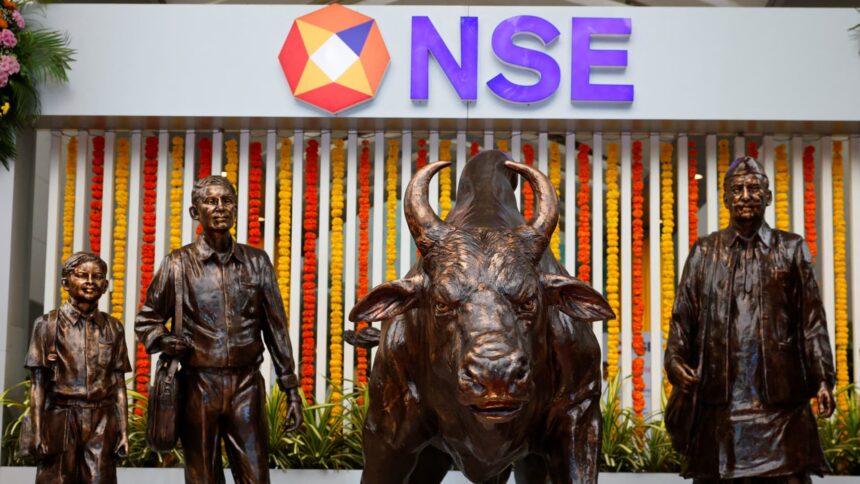
In a significant development for India’s financial landscape, the National Stock Exchange (NSE) has officially filed for an initial public offering (IPO), which is anticipated to be one of the largest listings in the country for the year. This IPO will be structured entirely as an offer for sale, featuring prominent domestic and international investors shedding portions of their stakes in the exchange.
Key stakeholders involved in this equity offering include India’s largest public sector bank, the State Bank of India, alongside prominent entities like the Canada Pension Plan Investment Board and Singapore’s Temasek. However, details concerning the IPO’s pricing and overall valuation remain undisclosed in the initial draft filings. Market veterans suggest that the entire approval process typically spans two to three months, contingent on clearance from India’s capital market regulator.
The NSE stands tall among the world’s top ten equity markets, boasting a total market capitalization of approximately 474 trillion rupees (or around $5 trillion). As the principal exchange in India, it holds a remarkable 93% share in the country’s cash market and nearly 100% market share in equity futures trading, complemented by a 75% share in equity options trading, as highlighted in the IPO documents. The NSE has been pursuing listing efforts since 2016 and currently boasts over 129 million unique registered investors.
In contrast, the NSE’s competitor, the Bombay Stock Exchange (BSE), operates on a significantly smaller scale, with a market cap of $17.2 billion and a prevailing price-to-earnings ratio of 66 times based on the trailing twelve months.
Despite the robust groundwork laid by the NSE, the overall IPO environment in India has faced challenges recently. Investor enthusiasm has waned, largely due to the geopolitical tensions stemming from conflicts in the Middle East. This turbulence has seen several major public offerings postponed. However, there is a cautious optimism in the air as indications suggest the Iran conflict may be drawing towards resolution, leading to a revival in IPO activity.
Adding to the excitement in the IPO landscape, reports indicate that Indian billionaire Mukesh Ambani’s Reliance Jio Infocomm, the country’s largest wireless operator, is also planning to file for a public issue, aimed at raising $4 billion by mid-June.
With both the NSE and Reliance Jio poised to potentially raise over 600 billion rupees (surpassing $6.3 billion), their IPOs together could represent nearly one-third of the total funds raised through 104 mainboard IPOs accounted for in the previous year, according to insights from Prashant Rao, director and head of equity capital markets at Anand Rathi Investment Banking. This surge in IPO activity could serve as a bellwether for the revival of investor confidence in India’s capital markets.