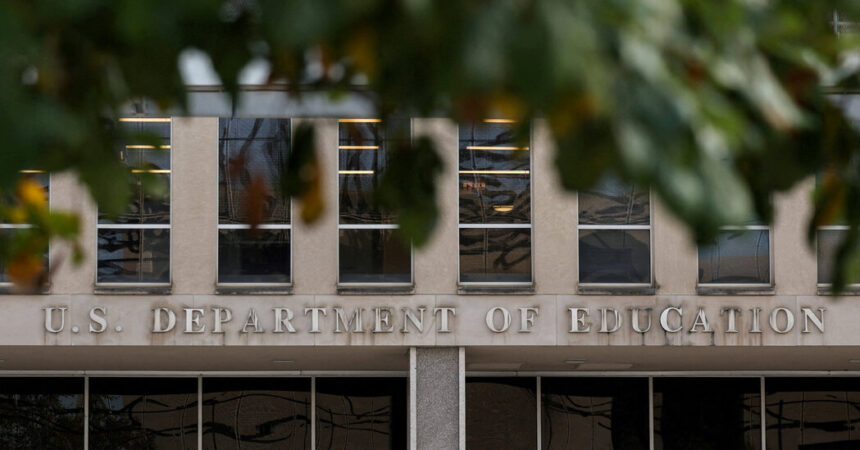
The Education Department announced a significant change regarding federal student loan interest rates, stating that rates will be temporarily reduced by up to one percentage point starting July 1, with the reduction set to expire on June 30, 2028. This measure aims to alleviate some of the financial burdens faced by federal student loan borrowers.
In a recent phone briefing with reporters, Nicholas Kent, the under secretary of education, highlighted the challenging landscape for borrowers, revealing that only slightly more than one-third of those with federal student loans are current on their payments. He also noted a concerning decline in the use of automatic payments, with just 40.1 percent of borrowers enrolled as of the end of last year, down sharply from more than 80 percent in 2019.
To be eligible for the reduced interest rate, borrowers must enroll in automatic payments by September 30. Those already enrolled will benefit from a reduction of 0.75 percentage points, on top of the existing 0.25 percentage point discount associated with automatic payments. This combined benefit will apply specifically to loans disbursed on or after July 1, 2012.
Kent emphasized the importance of this rate reduction as a means of promoting better performance within the federal student loan system, stating, “If we want a sustainable federal student loan system for future generations, we must improve its performance.” He underlined that the change is designed to assist borrowers in maintaining their financial standing.
The announcement comes at a critical juncture, as millions of federal loan borrowers are poised to receive notifications about transitioning to new repayment plans. This shift is part of a broader overhaul of the student loan system, notably the dismantling of the Biden-era repayment plan known as SAVE (Saving for a Valuable Education). The seven million borrowers previously enrolled in this plan will need to select alternative options for repayment, a process not taken lightly after nearly two years of payment suspensions.
This evolving situation underscores the need for borrowers to stay informed and proactive about their loan management in light of these upcoming changes. Further updates are expected as details unfold regarding the implementation of these new measures.