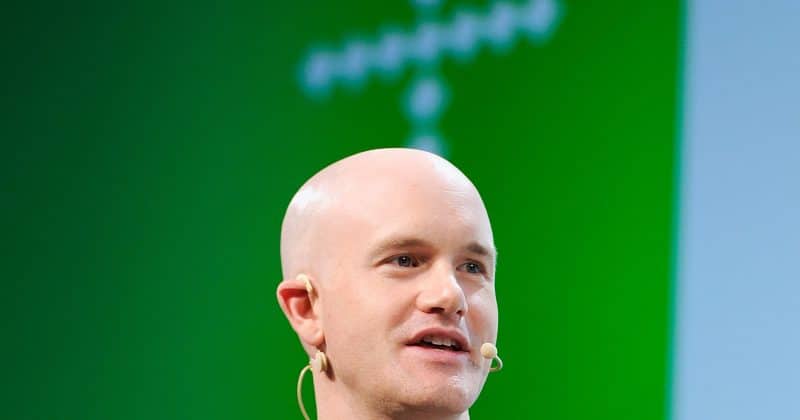
Brian Armstrong, the CEO of the largest cryptocurrency exchange in the United States, has offered a striking perspective on the current regulatory landscape, suggesting that the constraints on land-based operations are so severe that exploring outer space may soon present a more favorable option. In a post shared on X on June 18, Armstrong claimed that advancements in orbital computing are poised to exceed the efficiency of traditional data centers, largely due to the extensive regulatory burdens governing construction, energy consumption, and operational protocols on Earth. He boldly stated, “it is more efficient to fly to outer space than to try and build on land.”
His comments come at a time when the tech industry is buzzing with excitement over SpaceX CEO Elon Musk’s introduction of the AI1 satellite. This innovative spacecraft has been designed specifically for orbital AI computation and boasts an impressive 70-meter wingspan—comparable to that of a Boeing 747. It harnesses solar arrays to provide an average output of 120 kW of power, surging to a peak computational capability of 150 kW. Musk’s company is targeting late 2027 for the initial launches of the AI1 satellite, with aspirations to develop a constellation comprising up to one million such satellites in the future.
Armstrong envisions these potential space habitats and economic zones as experimental grounds for innovative regulatory frameworks, something he believes is sorely lacking on Earth. His goal appears to be advocating for a more conducive environment for technological advancement in contrast to the existing regulations that hinder progress within the U.S.
In recent months, Armstrong has been vocal about the regulatory hurdles hampering both the cryptocurrency and technology sectors, expressing concerns about the stagnation these challenges are causing. He has previously called for reforms to the accredited investor rules, arguing that current laws effectively exclude everyday Americans from accessing promising investment opportunities.
While Armstrong’s comments about orbital computing do not specifically mention any cryptocurrency tokens, they present a significant critique of current regulatory practices intertwined with a visionary outlook for the future of technology. However, the challenge remains that these ambitious plans may take years to materialize. The goal of establishing a constellation of one million satellites is particularly daunting, especially when considering that even the existing Starlink network, the largest satellite constellation to date, is a mere fraction of that target. The future of space-based operations and their implications for both technology and investment remain both exciting and uncertain.