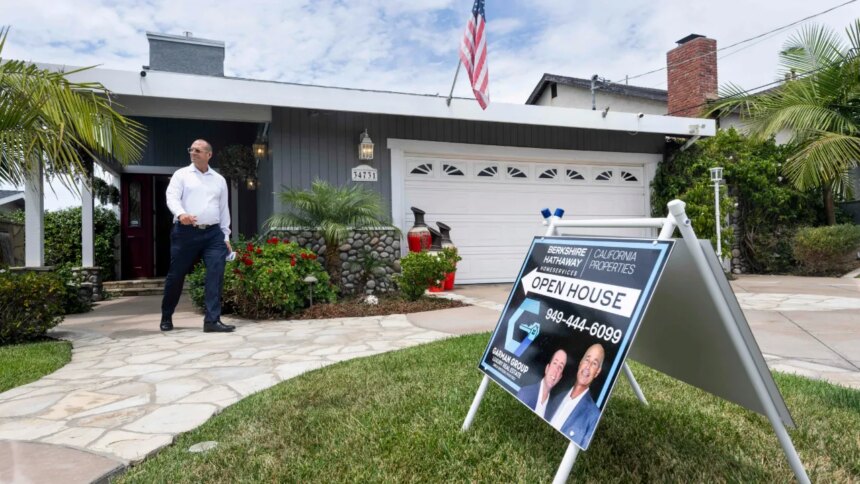
Housing and Urban Development Secretary Scott Turner recently shared insights on rising mortgage rates, the need for regulatory reforms in the housing sector, and the Trump administration’s efforts to enhance affordable homebuilding during an appearance on “Mornings with Maria.”
A new report from the Joint Center for Housing Studies of Harvard University indicates that the U.S. housing sector remains sluggish in the early part of the year, primarily due to high costs dampening consumer demand. The annual “State of the Nation’s Housing” report reveals that existing home sales are hovering near levels not seen in nearly 30 years, reflecting challenges first observed in 2023. Sales of new homes have seen little change, and while rental retention rates have increased, new occupancy numbers show a decline. Furthermore, new construction starts have decreased by 1% year-over-year, largely due to a 7% drop in single-family housing projects.
The report underscores ongoing supply shortages in the housing market but highlights that the main issue over the past year has shifted to depressed demand. The growth rate of homeowner households has slowed significantly, impacting homeownership rates for the second consecutive year. Moreover, the increase in the number of renters for the first quarter of 2026 has been less than half that of the previous year.
Economic conditions have contributed to this subdued demand; the job market has weakened considerably, with employment growth slowing from 1.5 million in 2024 to a meager 116,000 in 2025. Consumer confidence has also taken a hit, plummeting by more than 20 percentage points in 2025 and reaching an all-time low in April 2026, exacerbated by geopolitical tensions such as the ongoing conflict in Iran.
The financial barriers to homeownership are becoming more pronounced. With the household income needed to afford a home nearly doubling since 2020, potential buyers face significant challenges. The report notes that the growth rate of homeowner households has decreased by half, while the year-over-year increase in renters has also seen a sharp decline.
High prices continue to depress demand for housing, as many households grapple with elevated home costs. The report details how median prices for both new and existing homes are now surpassing $400,000. Existing home prices have surged by 54% since 2020, which translates to approximately five times the median income—a stark contrast to the three times ratio seen in the 1990s.
Current mortgage rates, exceeding 6%, have further complicated affordability. In the fourth quarter of 2025, the monthly payment on a median-priced home is projected to reach around $3,100, a substantial increase from $1,700 in early 2020. Consequently, the income necessary to comfortably afford such payments has escalated to more than $120,000, a significant rise from $66,000 just three years prior.
The combination of daunting costs and limited access to affordable housing options continues to challenge the housing market, leaving many aspiring homeowners on the sidelines as they navigate these economic hurdles.