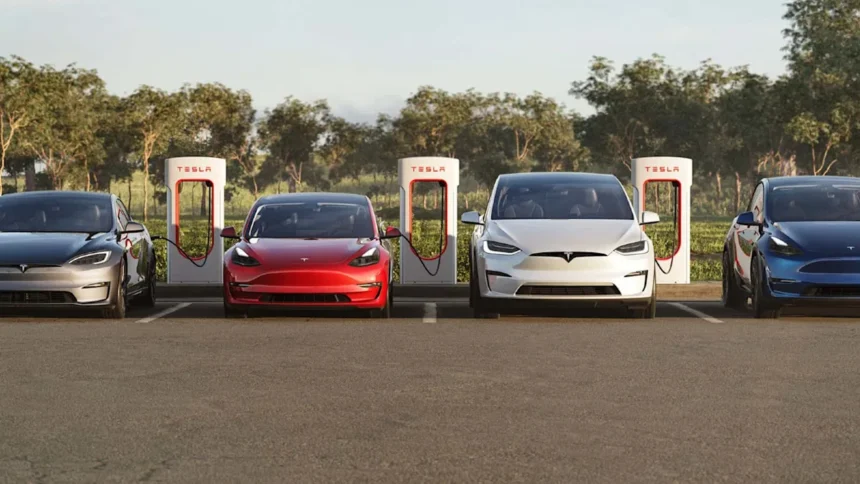
Over the long term, Tesla (NASDAQ: TSLA) has emerged as a remarkable player in the stock market. Since its initial public offering (IPO) in June 2010, investors who purchased shares at that time have seen an astonishing gain of 30,867%. This dramatic rise has become a benchmark for growth, making many investors dream of replicating such success in their portfolios.
However, for potential investors who didn’t seize the opportunity back in 2010, the recent public listing of Space Exploration Technologies (NASDAQ: SPCX), commonly known as SpaceX, may present a new chance to capitalize on another innovative company led by Elon Musk. With the momentum and excitement surrounding SpaceX, the question arises: should investors jump in, hoping to replicate the returns that those early Tesla investors enjoyed?
A critical aspect of making investment decisions is evaluating each opportunity based on its inherent strengths and weaknesses, rather than attempting to replicate past successes. Much like predicting a sporting event based on previous outcomes, assuming that SpaceX will deliver Tesla-like returns solely because of its founder’s reputation is a flawed logic.
Both Tesla and SpaceX share similarities that make them intriguing investment possibilities. When Tesla first entered the market, it was an innovative disruptor in an emerging industry that had much to prove. The traditional capital expenditures tied to automotive manufacturing deterred many potential contenders. Tesla’s decision to create its own sales network, bypassing conventional dealership models, added more challenges but ultimately gave it a unique position.
SpaceX mirrors this innovative spirit, operating in a rapidly expanding sector with increasing demand for rocket launches. Unlike the automotive industry, which has seen numerous competitors, SpaceX operates with fewer significant rivals and higher entry barriers, potentially giving it an edge.
Yet, while SpaceX’s revenue growth is impressive and reminiscent of Tesla’s early figures, there are critical differences to consider. Tesla’s IPO came with extensive media coverage and anticipation, but the level of hype surrounding SpaceX’s recent listing has reached new heights, positioning it as one of the most valuable listed companies worldwide. At times, SpaceX’s market capitalization has outstripped Tesla’s by over double, which raises eyebrows.
Currently, Tesla is a profitable enterprise, generating revenues that are five times greater than those of SpaceX, which remains in the red. Tesla is also faced with intensifying competition, particularly from Chinese automakers, which could pressure its profit margins. Despite these challenges, Tesla boasts a substantial user base and proprietary technology, which provide significant advantages.
In contrast, SpaceX’s business model has yet to demonstrate its ability to generate profits consistently, making its high valuation seem speculative to many investors. The initial buzz may propel SpaceX’s stock temporarily, but without a proven and profitable business model, the long-term sustainability of that growth remains uncertain.
As a result, some investors may choose to stand on the sidelines, seeking out more attractively priced growth opportunities elsewhere rather than taking the plunge into either Tesla or SpaceX shares. The current market for stocks showcases many viable options that could offer a more prudent investment strategy.
In the light of these assessments, it becomes crucial for every investor to conduct thorough evaluations, seek expert opinions, and keep a close eye on market trends to make informed decisions moving forward.