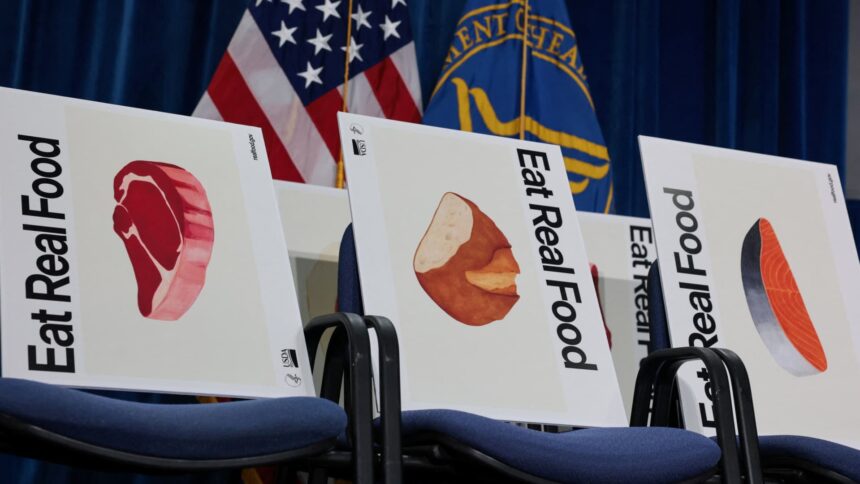
The movement to restrict the use of federal food aid for purchasing processed and sugary products is emerging as a significant challenge for major food and beverage companies in the United States. As of May, the U.S. Department of Agriculture (USDA) has authorized food restriction waivers for Supplemental Nutrition Assistance Program (SNAP) benefits in 23 states, impacting approximately one-third of SNAP participants. Research firm Numerator estimates that these restrictions could result in a loss of food and beverage sales amounting to $830 million this year, as consumers either adapt their spending to approved items or reduce their overall purchases.
Kroger’s CEO Greg Foran highlighted in the company’s first-quarter earnings call that many customers are facing financial pressures due to reduced SNAP benefits and higher gas prices, leading them to manage their budgets more carefully. He stated, “Customers are managing spend carefully and shopping with real intent.”
These waivers primarily target sugar-sweetened beverages and candy, showcasing a focused strategy rather than sweeping food prohibitions. With this regulatory shift gaining momentum, major packaged food companies are now closely tracking consumer purchasing behavior and evaluating whether to modify their product lines. Many of these companies have already begun adapting their offerings in response to changing consumer preferences over the past few years.
Recently, Iowa became the first state to legislate elements of the “Make America Healthy Again” (MAHA) initiative, which includes bans on artificial food dyes and restrictions on the sale of ultra-processed foods in schools as well as certain SNAP purchases. Iowa Governor Kim Reynolds emphasized that the new law is designed to enhance health and wellness for Iowans now and in future generations, thereby refocusing federal food assistance programs on their intended goal of helping low-income families afford nutritious food.
As part of the MAHA initiative, the law prohibits numerous synthetic food dyes, such as Red 40 and Yellow 5, from most K-12 school meals and vending machines. It also places limits on SNAP recipients’ ability to use benefits for items like soda and candy.
In light of these changes, many food companies are proactively assessing how to adapt. For instance, at a recent Goldman Sachs conference, representatives from Hershey shared their efforts to understand shifting shopper behavior by conducting in-store interviews with SNAP recipients. A Hershey spokesperson noted, “We’ve observed some consumer uncertainty at the register as new restrictions take effect,” and expressed optimism that the situation would stabilize as the implementation of policies becomes clearer.
Some food companies, including J.M. Smucker, have reported that the impacts of SNAP restrictions may not be as severe as anticipated. Smucker remarked that the current business environment doesn’t significantly differ from what they had experienced prior, and some product lines, such as Hostess treats, may be less affected at present. However, there is potential for broader restrictions that could include packaged desserts under evolving state definitions.
On a larger scale, recent data indicates that 3.5 million Americans have lost their SNAP assistance since a major reform was enacted last year, leading to increased difficulty for many families in affording groceries. Major retailers like Walmart, which accounts for about a quarter of all SNAP grocery expenditures, are particularly at risk as less money circulates in the SNAP program. Other retailers including Kroger, Costco, and Amazon also follow, capturing smaller shares of SNAP spending.
In addition to the restrictions on eligible food purchases, food companies are facing further scrutiny from officials. During a Senate Committee hearing in April, Health and Human Services Secretary Robert F. Kennedy Jr. indicated he would support a ban on junk food advertising on television, although no concrete steps toward such a ban have yet been undertaken.
In response to these regulatory changes and evolving consumer preferences, food manufacturers are accelerating their efforts to reformulate products to eliminate synthetic ingredients. Prominent brands like General Mills, Kraft Heinz, and Target have committed to phasing out certain artificial colors and additives by 2027 or sooner, while Nestlé recently announced it had fulfilled its commitment to remove specific colors from its U.S. food and beverage products on schedule.
As the landscape continues to shift, the interplay between government regulations, consumer demand, and corporate strategies will shape the future of food retail in America.