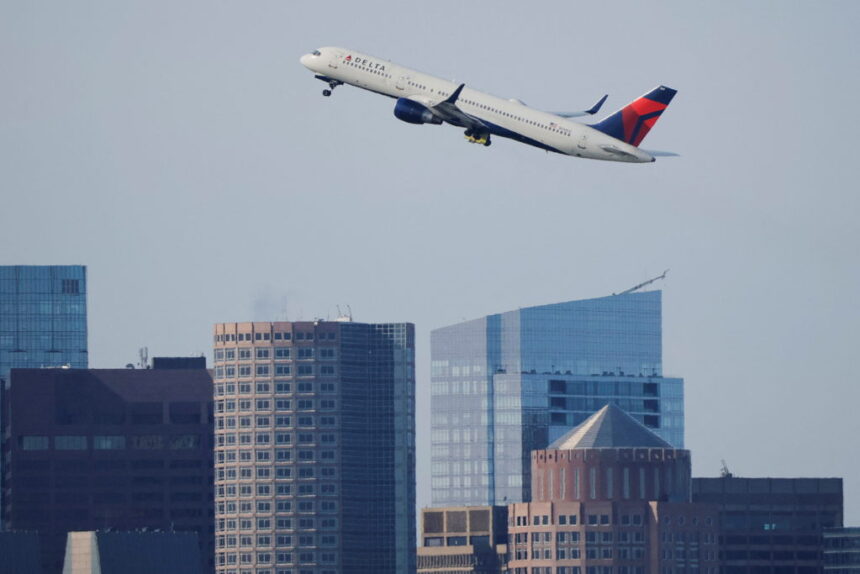
A recent incident at Boston Logan International Airport has raised concerns about aviation safety, involving a Delta Air Lines jet and an American Airlines flight. According to aviation expert Todd Curtis, the two planes came alarmingly close to each other, approximately 300 feet apart, during the Delta aircraft’s landing attempt on Saturday.
The Federal Aviation Administration (FAA) has initiated an investigation into this event, given its serious nature. Curtis, a former Boeing safety engineer who now co-produces a podcast focused on flight safety, emphasized the gravity of the situation, particularly because it involved professional airline crews. He noted that the FAA has been increasingly worried about runway incursions, and the details of this close encounter will likely receive heightened scrutiny.
This incident comes at a critical time, as a hearing addressing near-misses and runway incursions at U.S. airports is scheduled for Tuesday. The Senate Commerce Subcommittee on Aviation, Space, and Innovation will convene to explore strategies for improving safety within the national airspace system.
On the day of the close call, the Delta flight, which originated from Dallas, was forced to execute a go-around—an aborted landing procedure—when it encountered the American Airlines plane that was departing from an intersecting runway. According to flight logs and FAA reports, the Delta crew worked in coordination with air traffic control during this maneuver. Despite the tense situation, the Delta aircraft, carrying 129 passengers and six crew members, landed safely afterward, allowing for a normal deplaning process.
The FAA confirmed that go-arounds are standard, safe procedures that pilots or air traffic controllers can initiate when necessary, underscoring that such incidents, while alarming, are part of routine operational protocols.