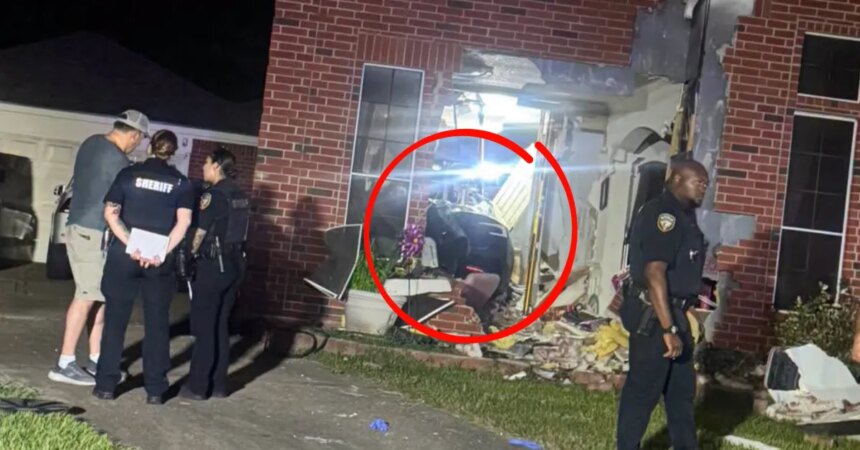
Tesla has confirmed that its Full Self-Driving (FSD) system was activated when a Model 3 veered off a residential road in Katy, Texas, resulting in the death of a 76-year-old woman in her home. However, the company asserts that the driver, Michael Butler, intentionally overrode the system by pressing the accelerator to its maximum capacity.
Tesla’s Head of AI, Ashok Elluswamy, indicated that vehicle data shows Butler floored the accelerator, propelling the car to speeds of 73 mph before it crashed through the front wall of a two-story house. The victim, Martha Avila Mantilla, was reportedly standing in the front room at the time of the incident.
Butler informed authorities that the vehicle was operating under Autopilot when it abruptly left Rose Hollow Lane and collided with the house. This scenario raises questions about the circumstances that led to Butler’s actions. Critics argue that an unexpected maneuver by the vehicle could explain why the driver accelerated instead of braking. The chaos of an unanticipated event while relying on an automated system might have caused Butler to panic and press the wrong pedal.
Tesla’s assertion that Butler “overrode” the self-driving system has sparked debate over the responsibility for the crash. Critics argue that such language could be seen as an attempt to absolve the company of fault, pointing to the inherent flaws in Level 2 driver-assistance systems, which require both an attentive driver and the readiness to take control in emergencies. These systems can lead to a false sense of security, encouraging drivers to disengage or become complacent.
The landscape of legal accountability for Tesla has been shaped by past incidents involving Autopilot. In a notable case from Florida, a federal jury found Tesla partly responsible for a 2019 crash that resulted in a fatality, despite the driver accepting significant blame. The jury ruled that Tesla’s marketing and inadequate monitoring systems contributed to a misleading perception of the vehicle’s capabilities.
Tesla’s credibility is further complicated by ongoing investigations into its vehicles related to potential safety issues, including an analysis covering approximately 3.2 million units, initiated by the National Highway Traffic Safety Administration (NHTSA). Concerns about Tesla’s transparency with accident data have been highlighted, particularly regarding how it communicates with authorities and the public in the wake of crashes.
The latest incident in Katy represents a broader concern about the safety of automated driving technologies and their real-world implications. Although Tesla insists on the driver’s misapplication of the accelerator, many argue that the systemic issues leading to such misapplications must also be addressed. Until Tesla actively revisits the strategies behind its marketing and driver monitoring, the risk of incidents involving uninformed users could persist.