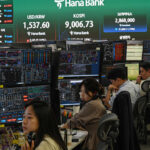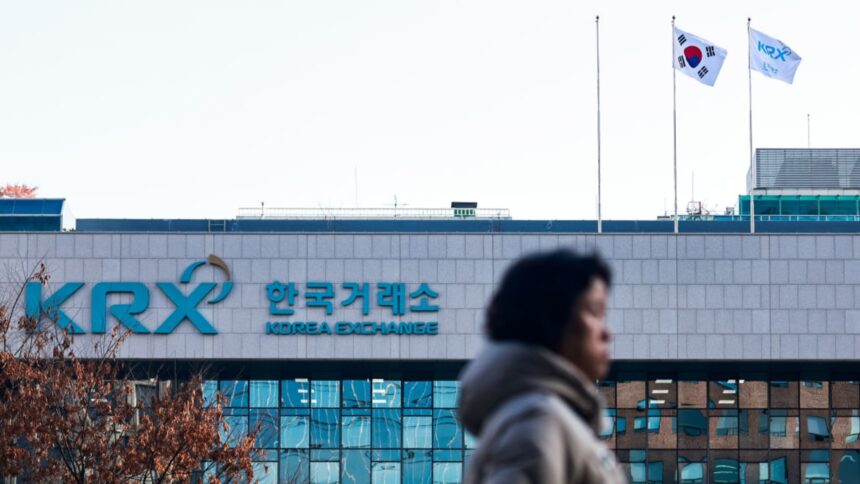
In South Korea, stock markets across Asia have experienced noticeable declines amid increasing political unrest linked to President Yoon Suk Yeol’s involvement in martial law discussions. The Korea Composite Stock Price Index (KOSPI), along with notable indices from Hong Kong, Shanghai, and several Southeast Asian nations—including Australia, China, India, and Thailand—has shown a downward trend as the political climate remains tumultuous, with implications also stemming from the ongoing crisis in Syria.
In a significant development, MSCI, the index provider, confirmed its decision to maintain South Korea’s classification as an “emerging market” following its recent review. This announcement has dashed anticipations regarding the potential elevation of South Korea’s market status to the MSCI’s Developed Markets watchlist, a necessary precursor for an official upgrade. Conversely, the review period for Indonesia’s classification was extended until November amid ongoing concerns regarding market accessibility, which had previously led to a freeze of the nation’s stocks from MSCI’s indices.
MSCI has highlighted several challenges that have hindered South Korea’s upgrade, most notably the limited convertibility of the Korean won in offshore markets. Additional barriers include a stringent investor identification system and restrictions on in-kind transfers and off-exchange transactions. The index provider pointed out that there have been initiatives from South Korean authorities aimed at addressing these issues; however, it noted that feedback from investors indicates these concerns have not been completely resolved.
South Korea is preparing for the launch of 24-hour trading in the dollar-won spot market beginning July 6, representing a critical step in efforts to liberalize its foreign exchange market for international investors. For years, South Korea has sought inclusion in the MSCI’s Developed Markets category, with analysts suggesting that such an upgrade could alleviate the “Korea discount”—a term that refers to the lower valuations often assigned to South Korean stocks in comparison to their global counterparts.
The nation’s Finance Ministry has asserted its commitment to ongoing reforms to achieve this coveted upgrade, stating, “If we continue to implement reforms in the foreign exchange and capital markets on our own schedule, we believe we can be included among advanced economies.” As the situation evolves, stakeholders are urged to stay informed for further developments.