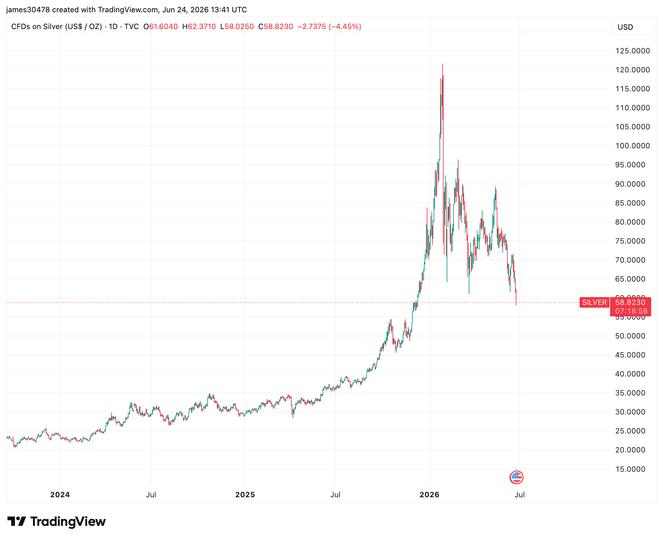
Gold and silver have both seen significant declines from their peaks earlier this year, with gold down around 28% from its January high of $5,600, now trading below $4,000 per ounce. Silver has experienced an even sharper drop, falling more than 50% to slip beneath $59 per ounce on Wednesday. This substantial selling pressure in precious metals can be largely attributed to increasing concerns over tighter monetary policy under the new leadership of Federal Reserve Chair Kevin Warsh.
Market analysts are currently anticipating two rate hikes of 25 basis points each by March 2027, which would raise the federal funds rate to between 4.00% and 4.25%. This shift in monetary policy comes in response to renewed fears of inflation, leading to a significant re-evaluation of strategies among investors.
The recent declines in gold and silver reflect a notable departure from earlier market sentiments in 2025, where the prevailing view centered around the “debasement trade.” This theory posited that ongoing fiscal deficits and escalating government debt would continuously erode the purchasing power of fiat currencies, driving investors toward precious metals as a safe haven.
In contrast, Bitcoin has struggled to gain traction during this turbulent period, maintaining a trading range around the $100,000 mark throughout much of the year. While gold and silver experienced aggressive rallies earlier in 2025, this stagnation of Bitcoin has led many in the investment community to question its relevance within the debasement trade. Investors are increasingly pondering whether Bitcoin’s perceived role as a hedge against fiat currency devaluation has diminished amid the shifting economic landscape.
As market dynamics evolve, all eyes will remain on both Federal Reserve actions and how they will influence investor strategies regarding gold, silver, and cryptocurrencies like Bitcoin in the face of changing monetary policy and inflation expectations.