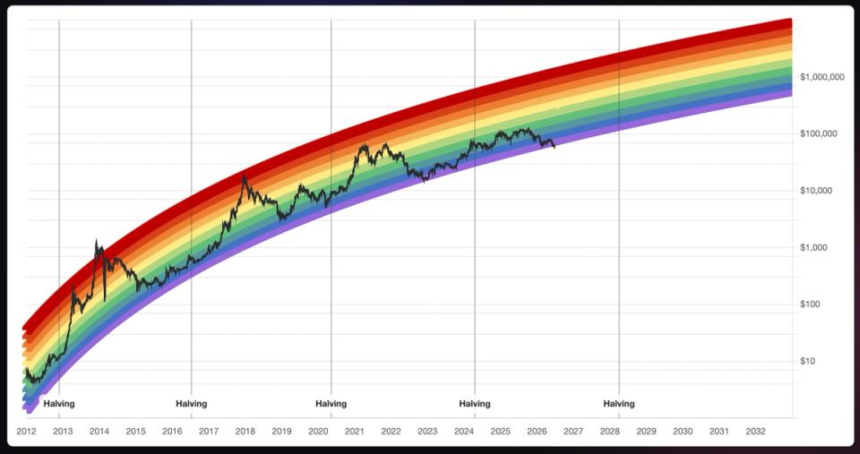
Bitcoin recently hit a high of $126,000 in October but has since retreated to approximately $62,500, falling below the floor set by the widely referenced Rainbow Chart. This trend has raised concerns among analysts as it diverges from other popular bitcoin valuation models, such as the Stock-to-Flow (S2F) model. The S2F model connects Bitcoin’s price to its programmed supply reductions and had anticipated significantly higher prices following the upcoming 2024 halving, but current prices are far beneath those projections.
Mark Zalan, the CEO of GoMining, discussed the implications of these price movements, particularly emphasizing what he termed the “Bitcoin Dead Zone.” He clarified that this zone does not signify the end of Bitcoin’s viability. “Historically, it has often marked periods of extreme fear and undervaluation, which were later followed by recoveries,” he explained. This zone reflects market sentiment rather than a definitive signal of Bitcoin’s demise. Although Zalan acknowledged that the chart remains a useful tool, he noted its declining precision. “The 2025 cycle showed that BTC doesn’t have to follow old patterns exactly,” he pointed out, alluding to the evolving market dynamics driven by ETFs, institutional investments, and changing structures.
Current trading patterns place Bitcoin close to its price leading up to the April 2024 halving. This situation contrasts sharply with prevailing expectations for this four-year cycle. Analyst Levin remarked that the Rainbow Chart corroborates observations from cycle data, suggesting that the previous assumptions of exponential growth may not hold true in the current landscape. The market is now a $1.25 trillion ecosystem shaped significantly by ETF inflows and institutional investments, thereby redefining how Bitcoin’s value is determined.
As market participants continue to navigate these uncertainties, the ongoing discourse highlights a shift in how Bitcoin’s price movements are interpreted against traditional valuation models. The trends observed are prompting renewed discussions around the fundamental factors influencing the cryptocurrency’s market performance.