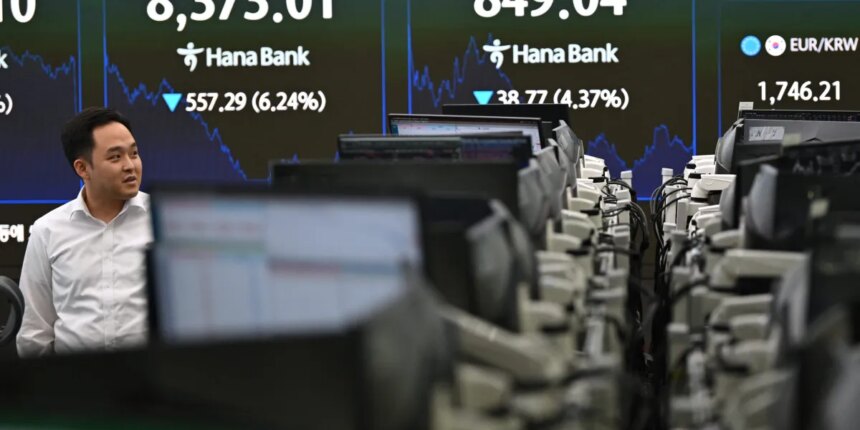
The Nasdaq composite is on course for its steepest weekly decline in over a year, with the S&P 500 set to experience its fifth consecutive drop. This downturn comes on the heels of recent optimism surrounding the U.S. and Iran’s de-escalation of hostilities, which had initially cleared a path for an anticipated AI boom amid falling oil prices and bond yields.
However, the tech sector is facing significant challenges, highlighted by SpaceX’s recent outperformance followed by a sharp decline in its stock value after making history with the largest IPO ever. Similarly, bonds issued just days ago by the aerospace company are now also experiencing a drop in value.
The South Korean stock market, particularly its Kospi index—the backbone of AI-centric companies like SK Hynix and Samsung—showed signs of exuberance, reaching record highs last week. Unfortunately, it has since plummeted by 10%, marking its fifth-largest single-day drop on Tuesday, largely triggered by SK Hynix’s announcement to decrease its AI memory production. This development sent global stock indexes spiraling downward.
Analysts from Capital Economics expressed concern over this volatility, likening it to selloffs noted during historical bear markets, including the Asian financial crisis and the dot-com bubble. Senior markets economist James Reilly stated that such instability reveals signs of excessive speculative activity and casts doubt on the longevity of the current market rally. He emphasized the pivotal role of semiconductor stocks, indicating that if these new market leaders falter, broader stock markets would face severe repercussions.
Despite positive earnings and guidance from chipmaker Micron aimed at instilling confidence in the AI rally, market sentiment remained shaky. Apple’s price increases due to ongoing chip shortages and indications that OpenAI may postpone its IPO until 2027 added to market turmoil. The looming expectation of the Federal Reserve raising interest rates has also fueled apprehensions.
Capital Economics noted the possibility that the AI rally might be nearing its terminal phase, cautioning that unrealistically high investor expectations for future profitability might lead to an impending equity bubble. While short-term gains could still be on the horizon—projecting an increase in the S&P 500 to 8,250 by the end of 2026—analysts warned of a subsequent collapse of 21% to 6,500 by the end of 2027.
Concerns over market dynamics are not limited to emerging trends; Wall Street’s collective behavior illustrates potential signs of a bubble. Following SpaceX’s monumental IPO, Alphabet, Google’s parent company, raised nearly $85 billion earlier this month through a secondary stock offering. Meanwhile, market leader Nvidia secured $25 billion in its first debt issuance amid the AI surge.
Ludovic Subran, Allianz’s chief investment officer, characterized SpaceX’s financial maneuvers as indicative of a “stretched boom” bordering on bubble status, highlighting the disparities between equity and bond investors. He pointed out that while equity investors may be willing to take risks, bondholders maintain a more grounded focus on returns.
Even a predominantly positive outlook from JPMorgan included cautionary notes. The bank raised its year-end S&P 500 target to 7,800, relying on strong earnings forecasts, but acknowledged the potential for sharp corrections due to various economic pressures. Analysts predicted a complex financial landscape ahead, with various factors like earnings pressure, crowded market positioning, increasing equity supply, and tightening monetary conditions likely affecting market stability.