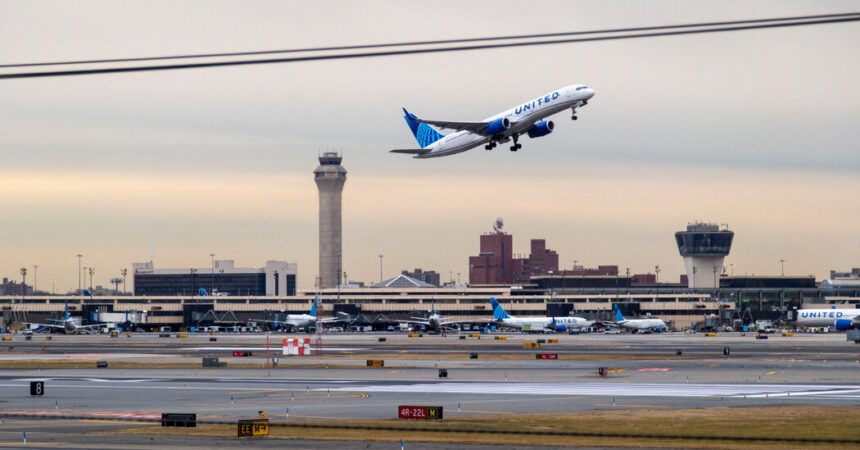
The Federal Aviation Administration (FAA) has initiated an investigation following an alarming encounter between a United Airlines flight and a drone during its descent into Newark Liberty International Airport on Friday evening. The incident occurred at around 5:20 p.m. as a Boeing 737 was arriving from Key West International Airport in Florida. The flight crew reported the sighting while approaching Newark, prompting immediate safety protocols.
Fortunately, the flight landed safely, and all 100 passengers, along with five crew members, disembarked without any incidents, according to United Airlines. This incident comes amid increasing scrutiny regarding the management of drone activity by the federal government. Recent years have seen a surge in unauthorized drone operations that have disrupted airport activities and posed risks to aviation safety.
The FAA strictly prohibits the operation of unauthorized drones in controlled airspace, especially near airports. Even when permitted, drone operators must adhere to altitude restrictions and several regulations designed to ensure safe operations. The agency actively encourages drone pilots to avoid proximity to airports, as the small unmanned aircraft can be challenging for pilots to detect and avoid.
Despite these regulations, drone sightings in and around airports have become more frequent. In a notable incident earlier this year, the FAA restricted airspace near the U.S.-Mexico border on two occasions when military personnel shot down a drone they deemed a potential threat, which was later identified as belonging to U.S. Customs and Border Protection.
FAA officials have reported that the agency receives over 100 reports of drone sightings near airports each month, raising concerns among aviation personnel. The drone industry has been eager to expand, bolstered by support from the previous administration, which designated “drone dominance” as a national priority. In a 2022 executive order, former President Trump emphasized the need for the U.S. to accelerate the safe commercialization of drone technologies.
However, the federal government has yet to establish comprehensive regulations governing these operations. The lack of clear guidelines, coupled with recent close calls involving drones and aircraft, has heightened concerns among aviation stakeholders and lawmakers. In response, the FAA proposed new rules earlier this year to prohibit drone operations near specific critical infrastructure sites, such as oil refineries and government facilities, contingent on requests from facility operators.
Additionally, the incident at Newark highlights ongoing challenges within the country’s air traffic control system. Controllers have experienced a significant turnover, leading to a labor shortage that has raised safety concerns. A prior incident in May 2025 resulted in a loss of communication between air traffic controllers and planes at Newark, creating delays and operational disruptions. This communication breakdown prompted some controllers to seek leave under a federal law allowing absences for physical or emotional distress resulting from job-related incidents.