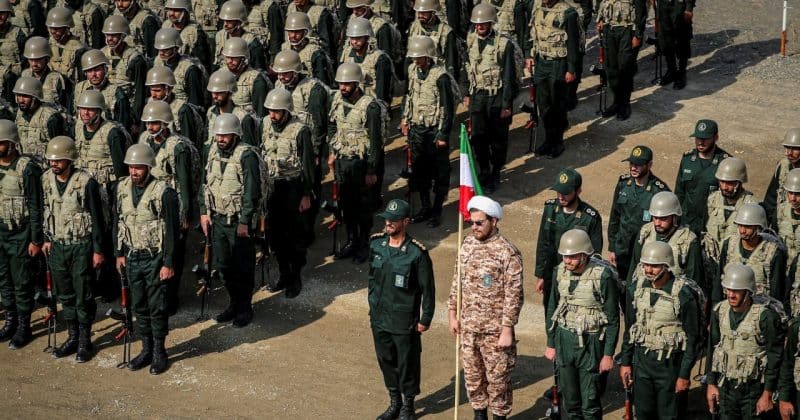
In a significant escalation of tensions between the United States and Iran, the Islamic Revolutionary Guard Corps (IRGC) executed missile and drone strikes on U.S. military installations in Kuwait and Bahrain on June 3, 2026. This operation targeted key facilities, including the Ali Al Salem Air Base in Kuwait and the U.S. Navy’s Fifth Fleet headquarters in Bahrain. These actions are framed by Iranian authorities as retaliation for prior American military operations, which reportedly included attacks on communication infrastructures on Qeshm Island and military sites near the strategically important Strait of Hormuz.
In response to the strikes, both Kuwait and Bahrain activated their air defense systems as air raid warnings were broadcast across the regions. Reports indicated that missile interceptions were attempted, though U.S. Central Command has acknowledged these threats while the actual damage assessment from the Iranian strikes remains largely unverified.
Adding to the gravity of the situation, there were unverified claims suggesting the conflict had possibly reached Jordan, a country that hosts multiple facilities for U.S. forces. If accurate, this development could further complicate an already volatile regional scenario, broadening the scale of confrontation.
The geopolitical instability also reverberated through financial markets, particularly impacting the cryptocurrency sector. Bitcoin’s value plummeted below $73,000 following news of the attacks, leading to over $1 billion in leveraged positions being liquidated. This sharp market retrenchment highlights a sudden shift in the risk narrative among traders, many of whom had been betting on an upward momentum in Bitcoin prices.
The correlations between the conflict and cryptocurrency markets were accentuated further by preceding developments. Just one day prior to the IRGC’s missile strikes, the U.S. Treasury Department imposed sanctions on Nobitex, Iran’s largest digital asset exchange, citing its connections to the IRGC and its role in evading international sanctions.
For crypto investors, the swift liquidation of leveraged positions underscores the fragility of market sentiment in the face of geopolitical upheaval. Many traders had been positioned long, anticipating continuous upward movement in prices. However, the sudden onset of conflict quickly led to a repricing of risk, triggering stop losses and forced selling in a cascading manner that amplified the market’s downturn.
This sequence of events highlights the intricate connections between geopolitical tensions and market dynamics, illustrating how conflicts can reverberate through financial systems in ways that impact investors on a global scale.