Tracker funds have emerged as a popular investment option for those looking to navigate the financial markets without the burden of complex decision-making. Established nearly half a century ago, these funds offer a way for investors to gain exposure to a broad array of assets, tracking specific financial market indices without the reliance on management teams, ultimately resulting in lower costs.
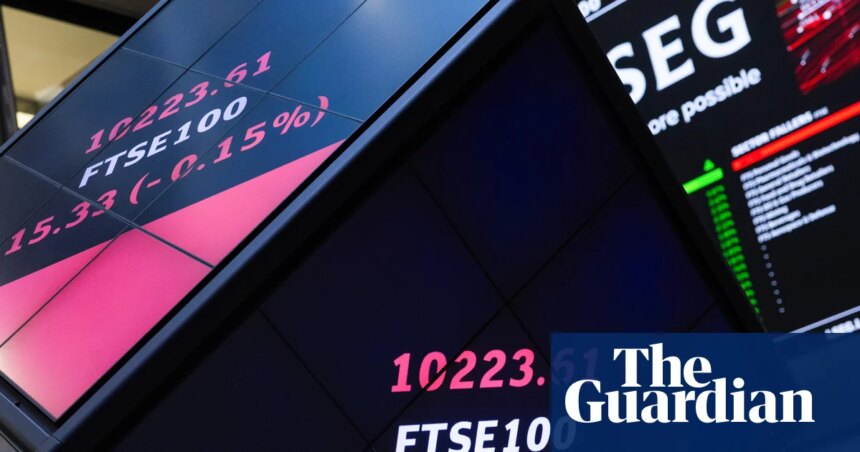
Primarily categorized as passive funds, tracker funds mirror the performance of an index—such as the FTSE 100 or S&P 500. When the underlying shares of an index appreciate, so too does the value of the investor’s holdings; conversely, the value falls when the index does. Actively managed funds, on the other hand, employ managers who make informed decisions to outpace a specific benchmark. Recent reports indicate that tracker funds frequently outperform their actively managed counterparts. For instance, only 29% of active fund managers outperformed the passive alternatives within their categories in 2025, a trend observed over the past decade where fewer than 24% succeeded against trackers.
The fundamental appeal of tracker funds lies in their diversification. Rather than concentrating investments in a single company, investors take stakes in various companies within an index, diluting risk. Iconic investor Jack Bogle, founder of Vanguard, famously advised against trying to pick individual winners, suggesting instead that investors simply “buy the haystack” to capture the overall growth.
Tracker funds typically operate on a “market capitalization” basis, meaning investments are proportional to the company’s size within the index. For example, if a company constitutes 5% of the index, 5% of the tracker fund will be allocated to that specific stock. These funds can take various forms, including open-ended investment companies (Oeics) and exchange-traded funds (ETFs). While Oeics create new shares upon investment and cancel them when sold, ETFs allow shares to be traded on stock exchanges throughout the trading day, making them more flexible for investors.
Experts recommend a long-term investment horizon, ideally no less than five years, to ride out market volatility and compound returns. However, while ETFs are often lauded for their low costs, investors should scrutinize fees as they may vary between passive ETFs and equivalent mutual funds.
For novice investors, selecting a tracker fund that mirrors large, stable companies may offer added comfort as these are typically less prone to failure compared to smaller enterprises. While many prominent tracker funds track indices like the FTSE 100 or the MSCI World Index—as the latter is heavily influenced by U.S. tech companies—there are also emerging funds focusing on niche sectors, such as renewable energy and cloud computing.
Investing in tracker funds can be straightforward. Options abound, from direct investment through fund providers to platforms like Hargreaves Lansdown and AJ Bell, or even through app-based banks. For those looking to make smaller, consistent investments, traditional tracker funds allow fractional unit purchases, unlike ETFs, which generally require the purchase of whole shares.
The performance of tracker funds has historically proven favorable over time. For example, an investment of £1,000 in the iShares Core FTSE 100 ETF five years ago would have grown to approximately £1,762 today. Similarly, investments in the Invesco MSCI World ETF and the Aberdeen UK All Share Tracker have also shown considerable gains over a decade.
Recently, following the record-breaking initial public offering (IPO) of SpaceX, several tracker funds associated with global or U.S. markets are poised to include the company by default. However, the timing will vary according to the specific index; while some indices have expedited the inclusion of SpaceX, others, like the S&P 500, have stricter criteria that could delay investment for years.
Overall, tracker funds remain a compelling choice for both novice and seasoned investors looking for diversified exposure with the potential for long-term returns.