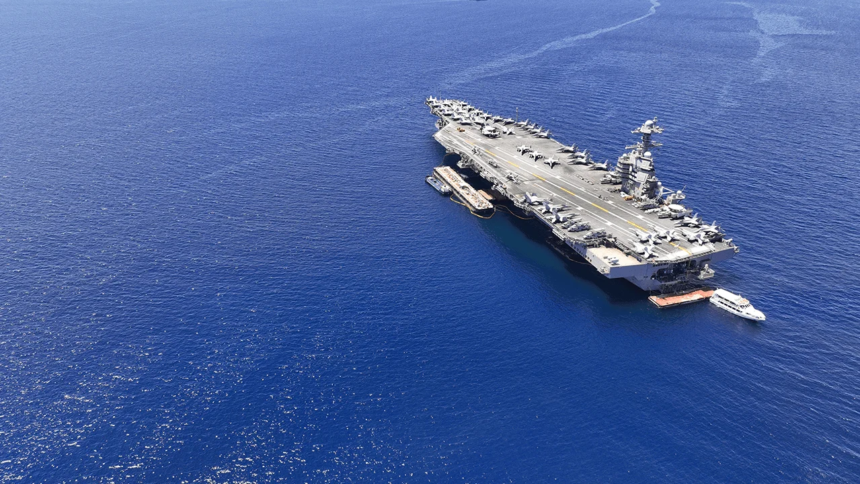
A recent study by Gao Tianyun at the National University of Defense Technology highlights evolving challenges faced by U.S. naval strategy in the Pacific, particularly regarding aircraft carriers. As tensions between the U.S. and China escalate, Gao’s research outlines a new 3,000-kilometer targeting concept that could threaten the safety of U.S. carrier strike groups. This range effectively spans from the Chinese coast to Guam, suggesting a significant operational shift.
Historically, distance has been viewed as a protective buffer in naval warfare, illustrated during the 1942 Battle of Midway, where Japanese forces initially relied on this strategy for an advantage. However, as the U.S. Navy attempts to leverage geographical distance as a defensive mechanism against Chinese missile threats, they must confront the reality that advancements in China’s surveillance and missile capabilities may be eroding this perceived safety margin.
The U.S. Navy has relied on the strategy of operating its carriers further from potential threats, thus complicating China’s ability to locate and engage these moving targets. Key locations like Guam play a pivotal role in this strategy, serving as a logistical hub and command center, while also acting as a buffer zone. However, as Chinese sensor technology improves, the effectiveness of such geographical buffers is increasingly in question.
Gao’s study emphasizes a multi-layered targeting approach, combining various technologies—satellites, drones, radar aircraft, submarines, and signal intelligence—to track and attack U.S. carriers from a distance. This coordinated strategy aims to create a complex threat environment for U.S. Navy defenders, which typically rely on advanced systems like Aegis and close-in defenses, alongside electronic warfare capabilities.
Implementing this ambitious targeting framework poses considerable challenges for the Chinese military. Achieving precise coordination across diverse platforms while under potential countermeasures from the U.S. complicates the operation significantly. The paper seems to serve not only as a theoretical advancement but also as a strategic message to Washington, underscoring that while relocating carriers may change the context of engagement, it does not eliminate the threats they face.
As geopolitical dynamics continue to evolve, the implications of this research could shape future naval strategies in the Pacific, forcing U.S. planners to reassess the efficacy of distance as a defense against China’s growing military capabilities.