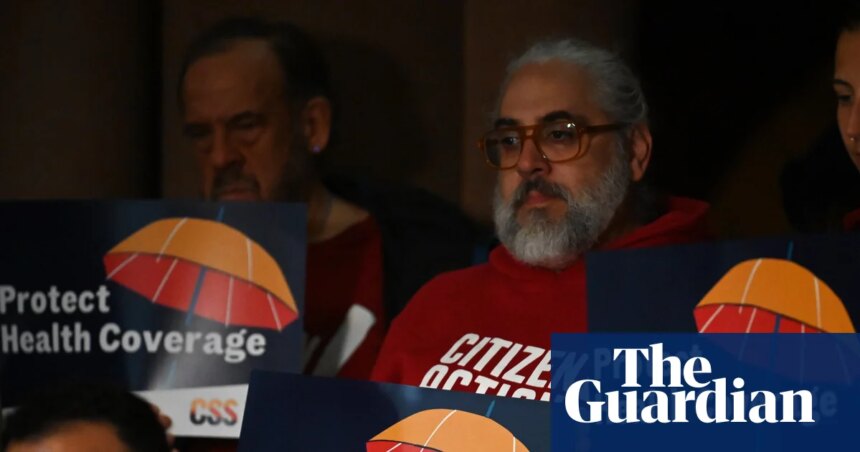
Nearly 500,000 moderate-income New Yorkers are bracing for a significant loss of health insurance coverage starting July 1, a shift anticipated as part of the sweeping changes introduced by HR 1, a Republican-backed legislation enacted approximately a year ago. This law, often referred to as the “One Big Beautiful Bill Act,” has resulted in drastic cuts to government health spending, totaling $911 billion nationally, while favoring permanent tax breaks primarily aimed at higher-income families and bolstering border security measures.
“It’s an all hands on deck situation,” commented Maia Dillane, senior director of strategy and implementation at the Arab-American Family Support Center (AAFSC) in New York City, where many of the upcoming coverage losses are expected to hit hardest. The AAFSC, alongside 19 other community-based organizations collaborating with the Community Service Society of New York, is actively working to assist affected individuals in finding new health coverage before a critical 60-day deadline. If they don’t secure new coverage within this period, they will have to wait until the next open enrollment in November. However, community leaders express concern that many might struggle to afford the new costs associated with available plans.
“We’re seeing a lot of families still going back and forth on whether they can enroll in one of the qualified health plans or if they will opt out altogether,” Rahem Bader, director of the community health and well-being program at AAFSC, noted. He added that families are increasingly faced with difficult decisions on how to allocate their limited resources among healthcare, food, and other essential expenses.
The impending loss of coverage is tied to the phasing out of New York’s “essential plan,” a vital component of the Affordable Care Act. In 2023, a federal pilot program was initially approved to provide health coverage to residents earning between 200% and 250% of the federal poverty level, which translates to up to $39,900 for an individual and $66,625 for a family of three. However, with estimates showing the living wage for a single person in New York to be approximately $73,000, the program aimed to bridge the gap for many.
This pilot program, initially set to last until 2028 and designed to be deficit-neutral for the federal government, faced significant upheaval following the enactment of HR 1. According to New York State of Health, the agency administering this program announced a drastic cut in essential plan funding, citing the termination of health insurance tax credits for lawfully present immigrants as a key issue. Unfortunately, state lawmakers were unable to find the necessary funding to sustain the essential plan, exacerbating the healthcare crisis.
As the fallout from HR 1 continues, health policy analysts at the Kaiser Family Foundation project that up to 1.1 million New Yorkers could lose their health insurance by 2034, factoring in additional provisions of the new law. Dr. Adam Aponte, chief executive at the East Harlem Council for Human Services, highlighted the impending challenges, noting that New York City is expected to bear the brunt of the losses, with over 250,000 residents at risk of losing coverage, including many of Aponte’s own patients.
The implications extend beyond the state level, as analysts predict that HR 1 could lead to an additional 10 million Americans becoming uninsured within the next decade. This anticipated trend is largely attributed to new work requirements imposed on some Medicaid beneficiaries, which may complicate access to necessary care.
Amid these daunting changes, Aponte emphasized that federally qualified health centers are likely to absorb many newly uninsured patients, further straining resources. With HR 1 projected to add $3.4 trillion to the federal budget deficit by 2034—a consequence primarily stemming from tax revenue reductions—financial pressures on both individuals and health systems are expected to intensify.
Experts predict that many individuals losing essential coverage will be compelled to navigate the often costly Obamacare marketplaces, where premiums and deductibles are seeing unprecedented increases. Following the expiration of special government subsidies, average deductibles have reportedly surged to $3,786 per person, with New York insurers already seeking average rate increases of over 20%.
The overall trend reflects a challenging dynamic, wherein the rising costs of insurance disproportionately affect those who are less healthy, while healthier individuals may feel compelled to forgo coverage altogether, thereby driving prices up for everyone.
Bader’s experience echoes this reality; many families he assists are not seeking preventive care but are instead looking for treatment options, highlighting the urgent need for affordable and accessible health coverage. As the clock ticks toward July 1, the full extent of the impending health insurance crisis remains to be seen, but the repercussions will undoubtedly ripple through families and communities across New York.