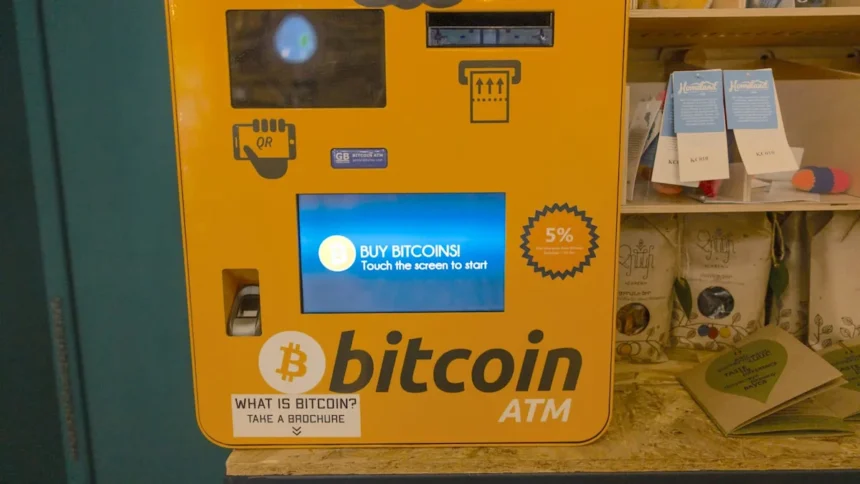
A recent surge in cryptocurrency scams has prompted the San Antonio Police Department to take decisive action aimed at protecting residents from financial losses. These scams typically involve callers impersonating authority figures such as police officers, court personnel, and utility representatives. They often exert pressure on individuals to make immediate payments through Bitcoin ATMs, leaving little room for victims to think critically or verify the legitimacy of the claims.
According to reports, a significant number of residents have fallen victim to these schemes. From January 2024 to early April 2026, the San Antonio Police Department recorded 660 reports related to cryptocurrency scams, totaling an alarming $39 million in losses. Victims of these scams include a wide age range, from teenagers to individuals in their 90s, but older adults notably represent a large segment of those affected, with nearly 38% of identified victims aged 66 and older.
The San Antonio Report highlights that almost 88% of these scams featured losses below $50,000, while four reported cases exceeded $1 million. The statistics have led city officials to act, resulting in the recent approval of an ordinance mandating the installation of bilingual warning signs on cryptocurrency kiosks. These kiosks, often referred to as Bitcoin ATMs, are notably more numerous in San Antonio than in other Texas cities like Dallas, Fort Worth, or Austin, with 193 locations currently identified.
The scam calls operate on a basis of creating panic and urgency, often stating dire consequences such as imminent arrest or fines unless payments are made immediately. Victims are frequently instructed to remain on the phone throughout the transaction, making it nearly impossible to consult with family members, store employees, or law enforcement before proceeding. Once the cash is converted into cryptocurrency and sent to the scammer’s wallet, it becomes virtually irreversible, complicating recovery efforts.
Laura Bravo, an investigative analyst with the U.S. Secret Service, noted that cryptocurrencies move more swiftly than traditional funds, which can pose additional challenges in tracking down lost money once it reaches foreign exchanges. While cryptocurrencies may offer advantages in promoting clean energy initiatives, they also present significant risks concerning fraud.
In response to these growing concerns, San Antonio officials are working on measures such as new signage that must be prominently displayed in both English and Spanish, using large, color-coded type. The development, distribution, and enforcement of these signs will be overseen by the San Antonio Police Department. Businesses that fail to comply with the new regulations could be subject to administrative fines ranging from $100 to $500 for each infringement, with daily violations counted as separate offenses. The new ordinance is set to take effect on July 1.
Additionally, mobile phone companies are joining the fight against scam calls by developing anti-scam software. Features in applications like Google’s Android phone app now allow users to receive notifications about potentially fraudulent calls, particularly those that may misrepresent themselves as coming from legitimate government agencies.