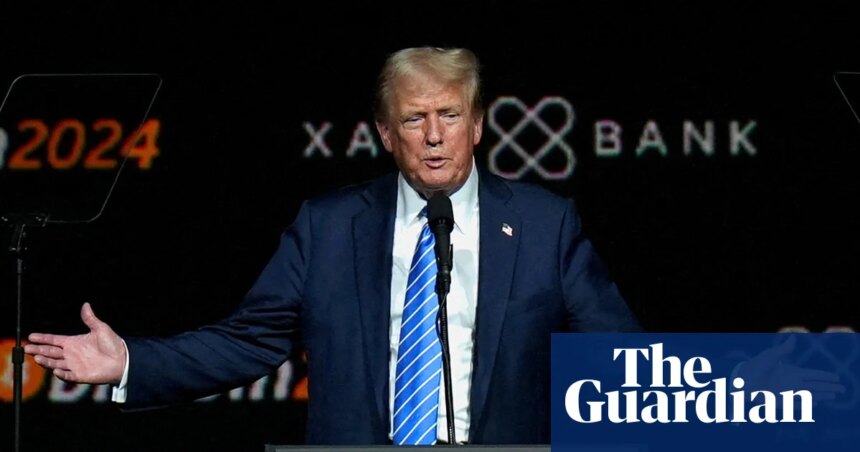
Donald Trump’s financial disclosures have revealed that he has amassed over $1 billion from his cryptocurrency ventures since resuming office. This information has sparked significant public outrage, with more than 400 Americans expressing their distress over the situation. According to a 927-page report released by the US Office of Government Ethics, the president earned a staggering total of $2.2 billion last year, benefiting from a diverse portfolio that includes real estate, golf courses, royalty arrangements, and a variety of Trump-branded merchandise.
During his second term, Trump and his family have intensified their investments in the digital currency sector. He announced ambitions for the United States to become the “crypto capital of the world,” paving the way for his ventures through businesses such as World Liberty Financial and CIC Digital LLC. These enterprises primarily focus on selling “governance tokens” and “memecoins” adorned with his likeness, drawing criticism for what many view as a potential conflict of interest involving access to presidential power.
In response to the backlash, White House spokesperson Anna Kelly stated that Trump and his family have never engaged in—and will not engage in—any conflicts of interest. In an interview, Trump dismissed concerns about his earnings, asserting, “I’ve always made money. I’m a business person. I’m a really good business person,” adding that his son Eric manages the family business, and he does not interfere with those affairs.
However, many citizens are voicing their views on what they perceive as an alarming growth of Trump’s wealth while in office. Opinions range from deep disillusionment to outright anger about the implications for American democracy. Gregg Savajian, a veteran from Washington state, articulated his feelings, stating the situation represents an insult to working-class Americans.
Meanwhile, Kathe Rhoades, a retired technical writer from Massachusetts, questioned the absence of laws preventing the president and his family from profiting through questionable dealings, while Brad Windsor, a retired firefighter, called for legal safeguards against such blatant corruption. Daniel Oberhauser, a government worker from Minnesota, shared his frustration about the disparity between Trump’s financial windfall and the economic struggles faced by many Americans.
Young voters like Jay Deshpande, a 22-year-old student, conveyed feelings of despair recognizing Trump’s immense wealth in contrast to their own struggles for employment. Similarly, Mark Boettcher, a pediatrician, condemned the exploitation of wealth in a system that fails to provide adequate healthcare for all, emphasizing how such extremes of wealth and corruption pose a threat to democracy itself.
Concerns have also been raised by citizens like Andrea Jacoby Brandy and Linda Stuart regarding the growing divide between the affluent and the impoverished, as well as the overall health of American democracy. Librarian Laurie Rivera indicated a fear that the erosion of democratic norms could jeopardize her children’s future.
In rural communities, individuals like 21-year-old Elise articulated firsthand the adverse impacts of rising costs and healthcare cuts during Trump’s presidency. These sentiments underline a broader frustration over the perception that while many struggle with socioeconomic challenges, Trump continues to accumulate wealth.
As public discontent mounts, the implications of Trump’s financial dealings pose serious questions about the integrity of the presidency and the ethical standards in governmental practices.