Over the past two decades, there has been a sea change in government technology, shaped by the evolving landscape of the internet. As society moves forward, the government faces the challenge of catching up with rapid advancements, particularly in the case of Web3. This next phase of the internet is heralding a new era, marked by concepts of digital ownership, trust, and engagement, which raises several questions for leaders at every level of government.
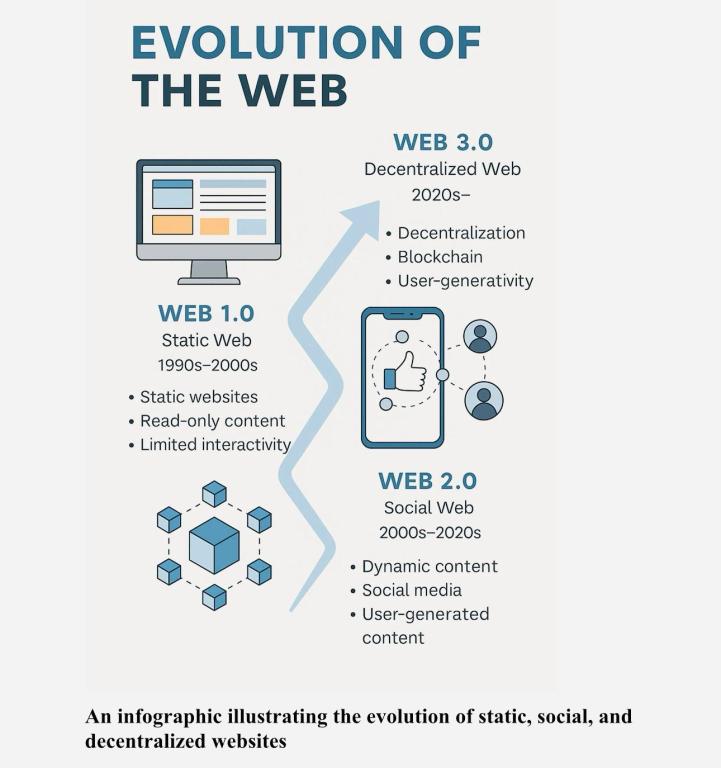
To understand Web3 fully, it is essential to reflect on the trajectory of the internet itself. The period known as Web1, which lasted from the 1990s to the early 2000s, was characterized by static websites and limited interactivity. This “read-only” web functioned primarily as a platform for government agencies to disseminate public information, lacking the security measures that are critical today.
With Web2, spanning the 2000s to the 2020s, the landscape began to shift. This era introduced the “social web,” allowing citizens to interact with cloud-based applications and engage with one another on platforms like Facebook and YouTube. However, it also brought vulnerabilities regarding user privacy and data centralization, whereby vast amounts of personal information became concentrated within major corporations. As a response, security measures such as virtual private networks and firewalls became standard practice.
Transitioning into Web3, which began in the 2020s, the focus is on decentralization. In this new digital framework, users have control over their own data and identities. Technologies such as blockchain facilitate secure transactions and identity verification through consensus models, which distribute data rather than storing it in centralized locations. This aligns seamlessly with the zero-trust architecture (ZTA) that many agencies now strive to implement.
ZTA operates on the principle that no user or system should be deemed trustworthy by default, necessitating continuous authentication and constant monitoring. The functionalities inherent to Web3—particularly its use of blockchain as an immutable ledger—support these principles. By holding users accountable for their digital identity credentials, the need for a central issuer is eliminated, thereby enhancing security and privacy.
While some perceive Web3 as a theoretical concept, numerous governmental organizations across the United States are already bringing it into practice. The Department of Homeland Security is investing in decentralized identity systems to expedite security and immigration processes. West Virginia has piloted blockchain voting for overseas military personnel. The General Services Administration and NASA are investigating the incorporation of smart contracts in procurement and grant management, while several state motor vehicle departments, including those in California and Illinois, are testing blockchain-based digital driver’s licenses.
As Web3 continues to develop, government officials and agencies must remain vigilant in adapting to these innovations. By embracing the principles of decentralization and prioritizing citizen engagement, they can significantly enhance service delivery and security in an increasingly digital world.