The South Korean stock market has experienced a notable surge in recent weeks, with the KOSPI index rising 1.54% on Friday to approach the significant milestone of 4,000 points. This uptick marks the third consecutive day of record-breaking gains, with the index increasing by over 6.5% this month alone.
Market analysts and investors are increasingly optimistic that South Korea may finally be moving beyond the so-called “Korea discount,” a phenomenon where Korean stocks have been unduly undervalued compared to their global counterparts. This valuation discrepancy is often attributed to a low price-to-earnings ratio that has plagued the KOSPI compared to similar economies.
HMC Investment & Securities analyst Kim Jae-seung commented that the government’s initiatives to revitalize the capital market seem to be yielding positive results. The recent ascendancy in share prices among domestic brokerage houses and financial institutions suggests a broader market recovery. Additionally, strong performances from semiconductor firms have played a crucial role in the index’s recent rally.
Since the inauguration of President Lee Jae-myung in June, various measures have been introduced to address the underlying issues contributing to the Korea discount. The president has expressed a goal of elevating the KOSPI index to 5,000 during his administration, emphasizing transparency and investor protections as key focuses for reforms.
Technical insights from Korea Investment & Securities researcher Yeom Dong-chan indicate that the positive market sentiment is likely to persist. Notably, data shows that more than 30 companies on the KOSPI have reached their 52-week highs this month, distributed across sectors such as semiconductor, shipbuilding, defense, finance, and biotechnology.
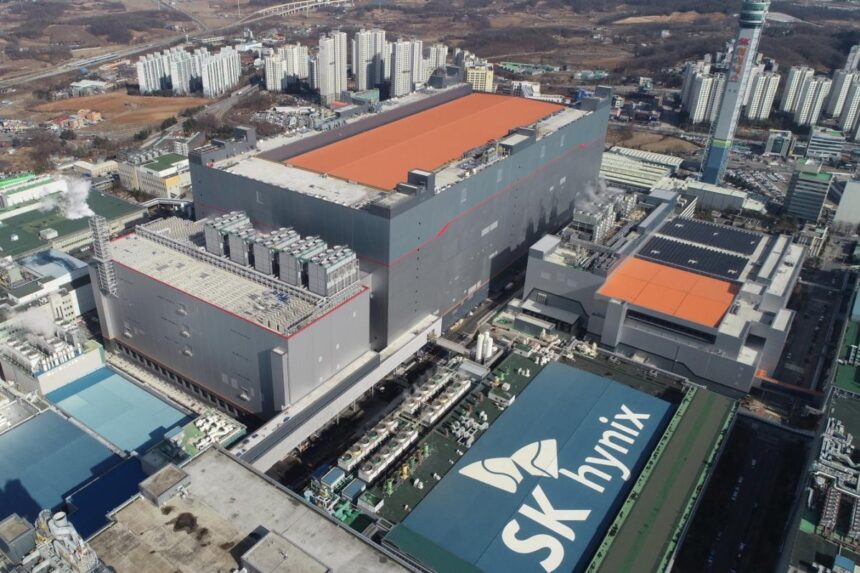
Key players in this ascent include SK hynix, which has seen its shares soar more than 21% in September alone, primarily due to the announcement of its development of the world’s first high bandwidth memory (HBM)4 chips. This innovation positions SK hynix as a leader in a sector driven by increasing demand for AI and supercomputing applications. Notably, the company achieved this milestone ahead of schedule, prompting a positive response from investors.
In contrast, while Samsung Electronics—the leading memory chipmaker globally—reported a 5.31% rise in market capitalization this month, it remains below its previous peaks. Analysts like Mirae Asset Securities’ Kim Seok-hwan suggest that SK hynix’s performance has significantly propelled the market, with foreign investments flowing into South Korean stocks, particularly into SK hynix.
Despite the current optimism, some experts advise caution regarding the sustainability of this rally. Lee Phil-sang, an adviser at Aju Research Institute, noted that although the administration’s measures to encourage shareholder protections and higher dividends have had positive effects, the broader economic challenges could impact the market’s future trajectory. He highlighted that while this stock market growth appears promising, it contrasts sharply with sluggish performance in the national economy, where the Bank of Korea has projected a mere 0.9% growth in output for the current year, a significantly low figure historically.
In summary, while the recent surge in the KOSPI reflects a vibrant market climate and strong corporate performances, underlying economic conditions warrant careful scrutiny as investors navigate this landscape.