Investor sentiment towards the AI sector took a significant hit on Tuesday as concerns over unsustainable valuations intensified. This downturn was highlighted by Palantir’s stock price, which plummeted despite the company reporting solid third-quarter earnings and offering optimistic guidance. Palantir surpassed revenue expectations, bringing in $1.18 billion compared to the anticipated $1.09 billion. However, the company’s shares experienced a drop of as much as 8% in pre-market trading, reflecting broader discontent in the tech sector.
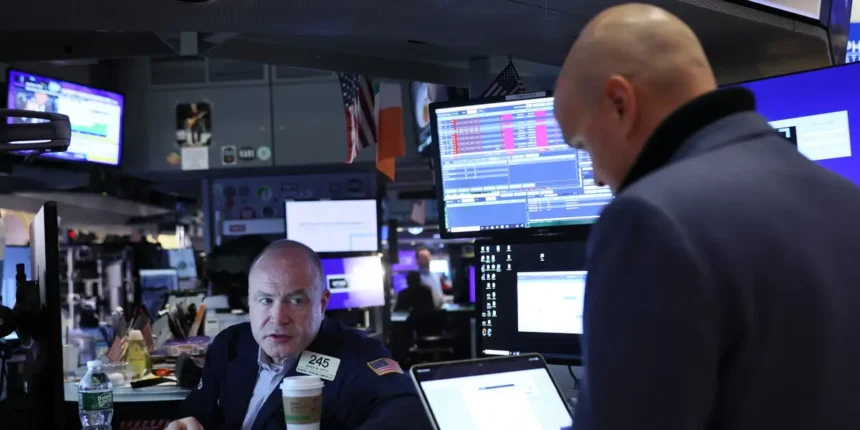
This decline in Palantir’s stock was echoed by other major players in the AI industry, contributing to a more than 1% drop in the tech-heavy Nasdaq 100 index. The S&P 500 also fell by 1%, while the Dow Jones Industrial Average shed 260 points. Amid this environment, bond yields saw a decrease as investors adopted a more risk-averse approach, with the 10-year Treasury yield edging down by one basis point to 4.09%.
Analysts and investors are increasingly questioning whether some tech companies have experienced excessive valuation growth too quickly, particularly given the billions invested in AI technology. On that front, Palantir’s forward price-to-earnings ratio was a staggering 240x on Tuesday morning, in stark contrast to Nvidia, which stood at around 29x.
Adding to market unease were remarks from top banking executives. Morgan Stanley CEO Ted Pick and Goldman Sachs CEO David Solomon both highlighted the rising risk of a market correction, with potential declines estimated at up to 20%. However, Pick tempered his remarks by suggesting that such a correction could be viewed positively, indicating that minor market pullbacks can occur without being triggered by a broader macroeconomic crisis.
Market analysts have expressed concerns over the returns on investments in AI technologies, drawing attention to a lack of market breadth. A report from JPMorgan’s Market Intelligence desk noted a “global risk-off tone,” indicating wider apprehension among investors. Senior market analyst David Morrison pointed out that the enthusiasm surrounding AI might be waning, and doubts are starting to surface regarding the technology’s ability to meet lofty expectations for future returns.
This decline in investor confidence is not isolated; recent activities have further reflected growing skepticism. Companies like Meta and Microsoft saw their stock prices tumble after announcing increased capital expenditure plans, which raised red flags about the substantial cash investments flowing into AI initiatives. Additionally, “The Big Short” investor Michael Burry recently disclosed a short position against Palantir and Nvidia, contributing to the prevailing selling pressure in the tech sector.
Palantir is no stranger to market volatility, having previously experienced considerable fluctuations. The stock fell approximately 40% earlier this year before recovering slightly, only to face another 18% dip in mid-August through September. This latest wave of selling has surfaced at a time when expectations about potential rate cuts are also being re-evaluated. Federal Reserve Chair Jerome Powell’s comments during the recent meeting have made it clear that a straightforward path to lower interest rates is uncertain, compounded by the complications arising from a government shutdown that has left markets functioning in a data vacuum.