Good morning and welcome to First Trade. If you’re looking to broaden your investments beyond the stock market, have you considered Pokémon cards?
First, let’s shift our focus to the world of artificial intelligence (AI), as it continues to shape investment strategies and market dynamics.
The competitive landscape of AI has taken an intriguing turn this week, especially with the moves made by two major players: OpenAI and Nvidia. The traditional method of seeking government investment appears to be losing its appeal, as companies like OpenAI and Nvidia increasingly dominate the conversation.
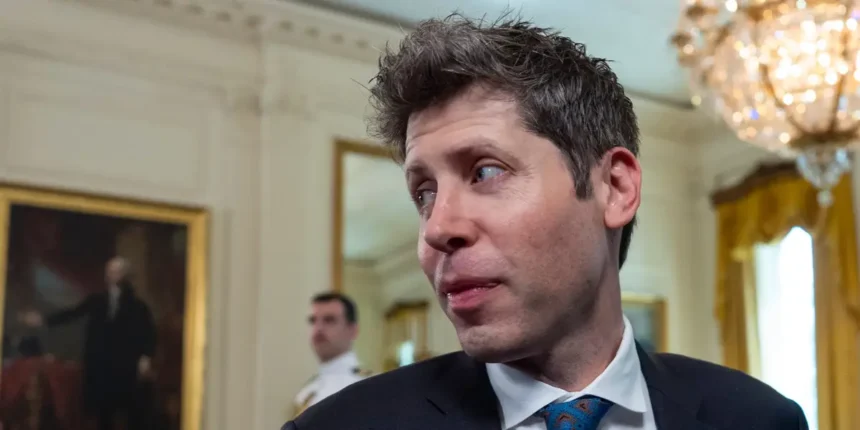
OpenAI may not be a publicly traded entity, but it holds significant sway over public market trends. In contrast, Nvidia stands as the most valuable company in history, credited with producing the semiconductor chips that enable the ongoing AI revolution. OpenAI’s partnerships read like a who’s who of the semiconductor industry—AMD, Broadcom, and notably, Nvidia. A recent partnership with PayPal also resulted in a notable uptick in shares, showcasing the ability of a private company to generate vast public market value.
In an additional twist, this week OpenAI extended a deal giving Microsoft access to its AI technology until 2032. In turn, Microsoft will receive 20% of OpenAI’s revenue, which led to a stock surge of up to 4% for Microsoft. Meanwhile, Nvidia made headlines by acquiring a $1 billion equity stake in Nokia, which subsequently saw a remarkable 21% increase in stock price following the announcement.
This intertwining of firms illustrates a clear narrative: OpenAI and Nvidia are the power brokers in AI development, compelling other firms to partner rather than compete directly. However, the influence of these titans can lead to significant market fluctuations. For example, Adobe experienced sharp declines with the introduction of OpenAI’s competing AI-generated video technology, and similar declines occurred for SaaS stocks after OpenAI released its internal tools.
The current market climate suggests a speculative environment, with critics cautioning against a potential AI bubble fueled by these intertwined partnerships. Some worry that should an AI bubble begin to deflate, the interconnected nature of these enterprises could worsen the fallout.
For now, those driving the AI narrative appear secure in their positions, reflecting robust investor interest and soaring stock valuations.
Shifting gears, an intriguing culture trend has emerged in Wall Street’s social landscape. Stone Street, once the epicenter of post-work social life for bankers and finance professionals in Manhattan, is under scrutiny in a post-COVID world.
Once bustling with energy and filled with patrons celebrating the end of the trading day, Stone Street has seen fluctuations in its evening crowd. Reports from recent visits indicate that while the street feels less vibrant than in its heyday, there are still moments of resurgence. For instance, team-building exercises and scavenger hunts bring back some of that old camaraderie among finance workers.
Observers note that while the scene has changed with the relocation of many banks, remnants of the past linger. Analysts shared nostalgic anecdotes about pre-COVID days, when the atmosphere was electric and the bars were filled to capacity.
Despite concerns that the energy might have waned, recent evenings show that Stone Street has not completely lost its appeal. New traditions are being formed, and opportunities for connection remain vital in this shifting landscape.
As investment trends and social interactions continue to evolve, staying connected to both market movements and community spaces will be crucial for navigating the landscape ahead.