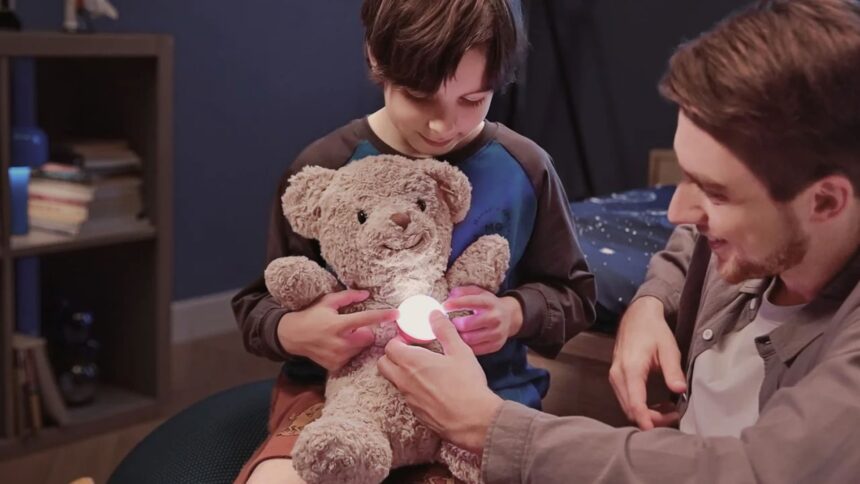
As discussions surrounding artificial intelligence continue to gain momentum, the realm of children’s toys is not being left behind. The latest entry into this innovative sector is CocoMate, a second-generation AI-powered plush toy from Chinese manufacturer Haivivi, which draws inspiration from the iconic Ultraman character. This AI toy is not just for play; it is also offering insights on a more serious topic: the potential risks associated with an AI stock market bubble.
During a recent demonstration, the Toy voiced its concern about the financial landscape, cautioning investors against pouring excessive funds into speculative ventures. “The AI market has been on a wild ride lately,” CocoMate said. “If investors pour too much money into unproven ideas without solid fundamentals, it could lead to a bubble burst!” This unusual perspective is a reflection of the ongoing debate on the sustainability of AI investments, particularly in the toy industry, where Haivivi is making its mark as part of a burgeoning $4 billion sector in China.
China has established itself as a key player in the global toy market, and the shift towards integrating artificial intelligence into playthings seems to be a natural progression. As part of an overarching strategy to enhance its status in the AI field, the Xi Jinping administration is encouraging companies and consumers to incorporate AI technologies into various aspects of life.
Haivivi is among the many companies riding this wave, which includes around 1,500 others that are developing AI-enhanced toys. Another notable player in this space is Chongker, a startup based in Chengdu that has developed an AI cat designed to serve as a comfort companion. This innovative toy employs voice recognition and cloud-based memory to adapt its behavior based on the owner’s preferences. “Some people like the cat to be more, maybe noisy or naughty,” stated Sean Xu, director of AI products at Chongker. “And some people just need the quiet one. So it will learn what kind of things you like.”
A fascinating feature of this AI cat is its simulated heartbeat, activated when the AI pet is held snugly for ten seconds. Xu claims this aspect helps provide comfort and calmness to users. On the energetic side of the spectrum, Loona, an AI puppy developed by Keyi Tech, showcases a different approach. Utilizing cameras and lasers, Loona is designed to autonomously navigate its environment while recognizing and responding to different family members.
However, the increasing interest in intelligent toys brings with it significant concerns, especially regarding their impact on young children. New research conducted by the Public Interest Research Group (PIRG), a U.S. consumer safety organization, raises alarms about the effects of AI toys that may disseminate inappropriate or dangerous information. The findings spotlight the potential privacy issues tied to these devices, with reports of toys utilizing large language models that occasionally produce misleading information, or “hallucinations.”
Tech consultant Tom van Dillen, based in Beijing, emphasized the ongoing efforts by toy manufacturers to implement safety measures for their products. For instance, Haivivi incorporates security features in its CocoMate toys, allowing parents to access transcripts of their children’s interactions with the AI. In a recent interaction where a child asked about peer pressure related to drugs, the Ultraman character firmly issued a warning, advising that such behavior is a “TERRIBLE idea” and encouraging the child to inform a trusted adult if pressured.
As the line between technology and traditional toys continues to blur, the industry faces both promising advancements and vital challenges. The conversation about AI in toys is likely to evolve further, with manufacturers responding to concerns while still striving to provide engaging and educational experiences for children.