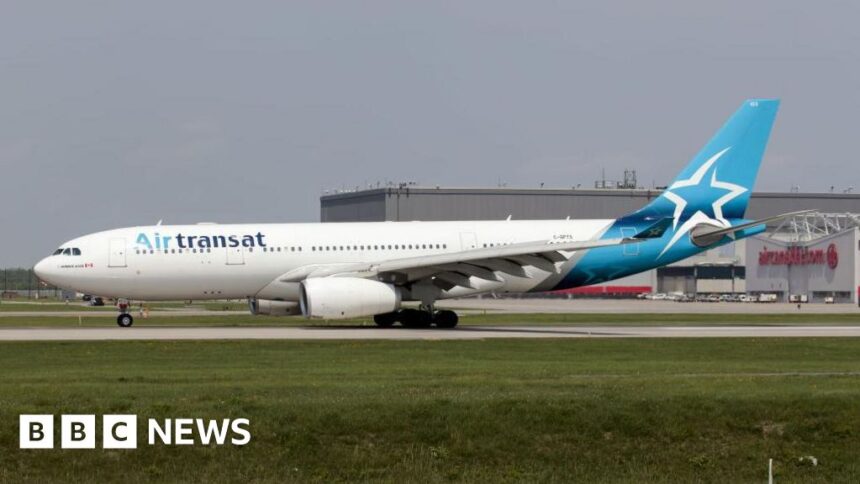
Air Transat, one of Canada’s leading airlines, announced plans to begin gradually suspending certain flights starting Monday, in anticipation of a possible strike by its pilots. The airline’s pilots, represented by the union, issued a 72-hour strike notice over the weekend, indicating that they would cease work on Wednesday if an agreement on a new contract is not reached.
In light of this strike notice, Air Transat stated it would methodically reduce its operations “to prevent the consequences of a sudden, unplanned interruption.” The airline expressed that the strike notice was “premature,” while a union representative emphasized that there is still time to avert the impending strike.
Capt. Bradley Small, a leader within the pilots’ union, voiced the frustrations of the pilots, asserting, “No pilot wants to strike, but Air Transat management has left us no choice.” He pointed out that months of unproductive negotiations have driven the pilots to consider this action. Should the situation not improve, he said, management would bear responsibility for any resulting canceled flights and stranded passengers.
The ongoing negotiations, which have been in progress for nearly a year, aim to replace the pilots’ current contract from 2015 with terms that would secure “industry-standard pay, benefits, work rules, and job security,” according to the Air Line Pilots Association. The union reported that a significant majority—99%—of its 750 pilots had voted in favor of empowering their leadership to initiate a strike if necessary.
In response, Air Transat is scheduled to start canceling flights on Monday, with a complete suspension of services on Tuesday, in preparation for the potential strike. Julie Lamontagne, a human resources officer for the airline, labeled the strike notice as premature, citing the progress made during negotiations and the generous offers presented by the airline.
Lamontagne further accused the pilots’ union of exhibiting “indifference toward Transat” through what she described as a “reckless decision” to authorize a strike, claiming it does not accurately reflect the state of negotiations. To mitigate any fallout from a potential strike, the airline maintained that the cancellations were essential in order to prevent the stranding of crews, passengers, and aircraft abroad.
This current situation recalls a similar incident in 2024, when Air Transat’s flight dispatchers nearly declared a strike after negotiations stalled, but that action was ultimately averted. The stakes are high as both parties continue discussions in hopes of reaching an agreement before the critical strike deadline approaches.