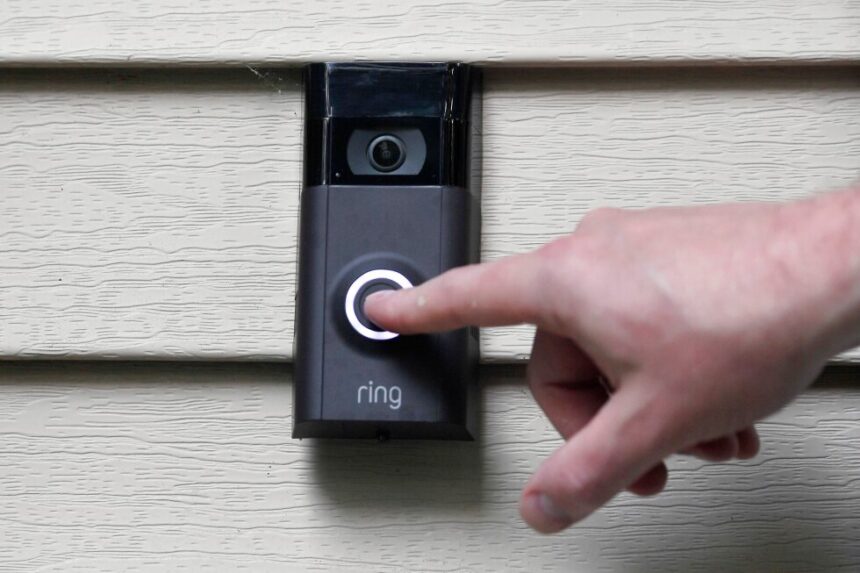
Amazon’s Ring, a prominent maker of smart doorbells, has officially ended its partnership with surveillance technology company Flock Safety. This decision comes after significant public backlash following a 30-second advertisement aired during the Super Bowl. The ad featured the use of Ring’s Search Party feature, which helps locate lost dogs through a network of cameras, but it raised alarms about the implications of advancing towards a dystopian surveillance society. Notably, the Search Party feature was not linked to Flock, despite the widespread concerns.
While Ring’s announcement did not specify the advertisement as a factor in its decision, the timing has drawn considerable attention. Last year, Ring and Flock had announced plans for a collaboration allowing Ring camera users to share their video footage with law enforcement through a feature called Community Requests. However, Ring stated that a comprehensive review revealed that the integration would demand far more time and resources than initially expected, leading to the mutual decision to terminate the partnership. Ring clarified that because the integration never launched, no customer videos were ever sent to Flock.
Flock Safety confirmed Ring’s statements, stating that it had never received any customer videos from Ring and emphasizing that the decision to end the integration was made collaboratively to allow both companies to serve their customers better. The company maintains a commitment to providing law enforcement with tools that adhere to local laws and policies.
Flock Safety operates one of the largest networks of automated license-plate reading systems in the United States, with its cameras installed in numerous communities and capturing billions of license plate images monthly. The company has faced scrutiny, particularly during heightened immigration enforcement under the previous administration, but it asserts that it does not partner with Immigration and Customs Enforcement (ICE) or provide direct access to its camera data for any agencies within the Department of Homeland Security. Flock paused its pilot programs with Customs and Border Protection and Homeland Security Investigations last year, amid concerns about privacy and civil rights.
Flock stresses that it does not own the data collected by its cameras; rather, that ownership lies with the customers—primarily police departments. If a department chooses to collaborate with a federal agency like ICE, Flock has no authority to intervene in that decision, as indicated on its website.
In addition to the concerns surrounding the Flock partnership, Amazon has faced scrutiny over its Ring doorbell cameras for a range of surveillance-related issues. The Super Bowl advertisement not only highlighted the Search Party feature but also illustrated potential misuse of technology in monitoring neighborhoods, prompting public fears about the tracking of individuals. Viewers took to social media to express concerns, with many stating they would disable the feature due to its implications.
The Electronic Frontier Foundation, an organization focused on civil liberties in the digital realm, voiced its apprehension regarding the erosion of privacy. The Foundation pointed out that Amazon’s Ring technology already integrates biometric identification through features like “Familiar Faces,” which scans and compares the faces of individuals in view of the camera against a database of pre-approved images. Such capabilities raise alarms about the potential integration of face recognition with neighborhood tracking functionalities.
Democratic Senator Edward Markey from Massachusetts has also called on Amazon to discontinue its “Familiar Faces” technology. In a letter addressed to Amazon CEO Andrew Jassy, Markey highlighted the strong public opposition to Ring’s invasive monitoring and image recognition practices, viewing the backlash to the Super Bowl ad as indicative of broader concerns regarding privacy and surveillance in society.