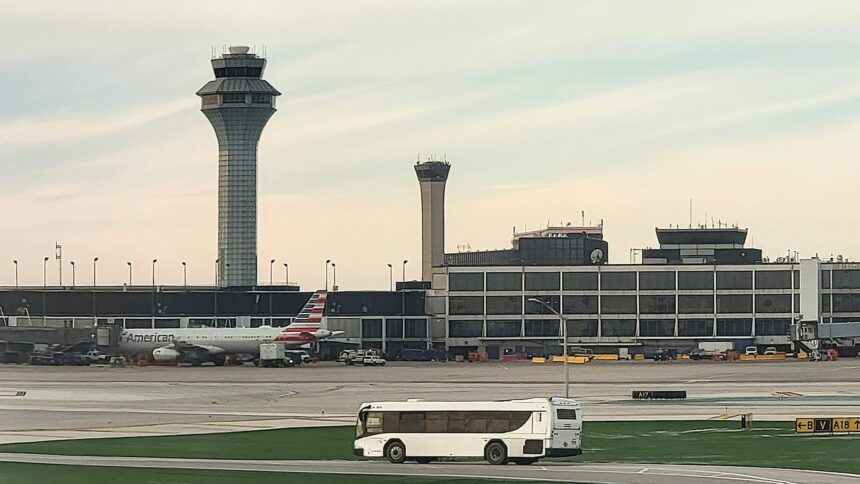
American Airlines and United Airlines are currently engaged in a fierce competition at Chicago O’Hare International Airport, a situation that has intensified in the wake of recovery efforts following the COVID-19 pandemic. Following a significant decline in their schedules during the pandemic, American found itself in a precarious position as it had its gates reduced earlier than anticipated due to lease agreements. To strengthen its presence at the airport, American has worked to expand its operations, including leasing additional gates from Spirit Airlines.
In a bid to curtail American’s growth opportunities, United Airlines has ramped up its own flight offerings, announcing plans for its most extensive schedule in Chicago’s history this summer. The airline will operate flights to 222 destinations, which breaks down to 175 domestic and 47 international locales, with a staggering 750 flight departures per day. This reflects an approximately 25% increase in capacity compared to pre-pandemic levels in 2019.
On the other hand, American Airlines aims to reach “more than 180 destinations,” a target that currently stands at 183, while restoring its schedule to just over 500 flights per day, corresponding roughly to pre-pandemic numbers. Despite these efforts, it is United’s aggressive expansion that has raised concerns over sustainability at the airport, with the Federal Aviation Administration (FAA) cautioning that such growth is not feasible in its current form.
The FAA plans to implement a “scheduling reduction” process for O’Hare and will issue an operating limits order for the summer season in 2026. This intervention stems from a stark discrepancy in the airlines’ proposed schedules, which showcase around 3,080 peak daily takeoffs and landings as opposed to the 2,680 recorded last summer. The FAA has assessed that a manageable figure is around 2,800, signaling potential reductions of roughly 280 daily operations, equating to a 9% cut from the existing schedule.
To facilitate this process, a meeting is set to commence on March 3rd, highlighting the need for open dialogue among all scheduled carriers, including those not actively serving O’Hare, alongside representatives from the Chicago Department of Aviation. The FAA will present a demand overview illustrating congestion periods throughout the day and invite airlines to propose their reduction plans during confidential discussions.
While the FAA’s decisions will apply to U.S. carriers exclusively, American Airlines has expressed support for the FAA’s proactive approach, citing the necessity for maintaining operational integrity within Chicago’s airspace. The airline’s leadership anticipates that United, which is currently expanding more rapidly than its counterpart, will face greater challenges if any reductions are mandated.
American’s strategy appears to be a calculated expectation that United will need to make more significant cuts, especially if both airlines are required to reduce by the same percentage. This added competition may lead to a decrease in airfares, creating further challenges for both airlines in a market looking to stabilize after tumultuous times.
Moreover, the FAA’s approach is expected to involve targeted cuts rather than sweeping reductions across the board, focusing on peak traffic times and prioritizing efficiency. Recent allocations of flights, particularly those utilizing regional jets, might be especially vulnerable to cuts as the FAA and airlines navigate this complex operational landscape. As the competitive dynamics at O’Hare continue to unfold, all eyes will be on how each airline responds to FAA recommendations and the potential impact on service levels and pricing in the Chicago market.