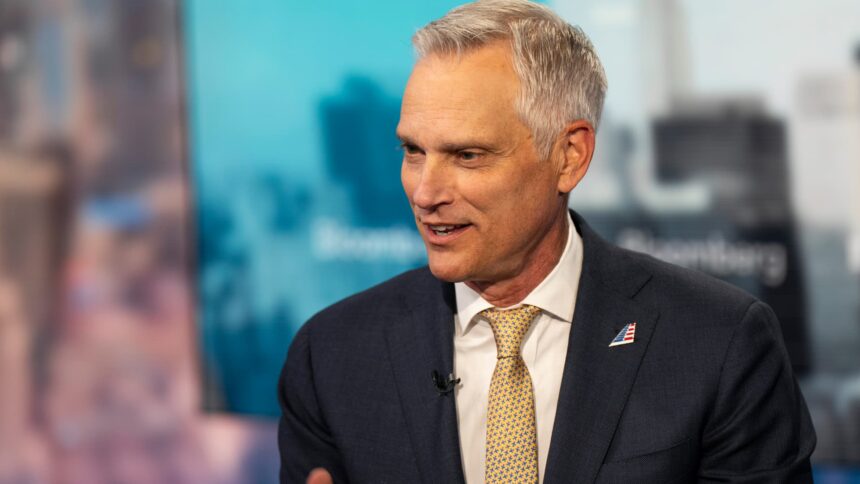
American Airlines is facing significant challenges in its ongoing efforts to improve operational efficiency and enhance profitability, with employees growing increasingly frustrated amid recent setbacks. Flagging behind competitors such as Delta Air Lines and United Airlines, the airline is grappling with questions regarding CEO Robert Isom’s leadership after the latest financial reports revealed a stark disparity in profit-sharing rates, disappointing the workforce of over 130,000 employees.
The Allied Pilots Association, representing a substantial number of American’s crew members, has formally reached out to the airline’s board, expressing concern over the company’s current trajectory. The union highlighted the lack of a clear strategy and identity, demanding decisive leadership to turnaround the airline’s fortunes. Their dissatisfaction has been intensified due to operational struggles following recent severe winter weather, which left many crews stranded and without adequate accommodations.
In an earnings call held on January 27, Isom articulated the realities of American’s financial performance, revealing a meager profit of $111 million last year, which paled in comparison to the profits reported by its competitors. Delta recorded a staggering $5 billion profit, while United surpassed $3.3 billion. During the call, Isom acknowledged the disappointing profit-sharing pool this year, attributing it to the challenges in achieving substantial profit margins.
As part of its strategy to regain market share, American Airlines is heavily investing in premium options, hoping to attract higher-paying customers and improve its revenue streams. This comes in the wake of a failed business travel strategy, leading to a shift in focus towards enhancing customer service and reworking the airline’s overall network strategy.
In recent discussions with union leaders, operational issues were top of mind, amplifying calls for accountability from American’s leadership. The airline is still recovering from a severe winter storm that disrupted travel across the U.S., further complicating recovery efforts compared to rivals who managed to navigate the conditions more effectively.
The atmosphere within the company is tense, as both pilot and flight attendant unions collectively push back against Isom’s administration, demanding more than just verbal assurances. American Airlines has a crucial year ahead, with Isom emphasizing a need for substantial change and expressing optimism for improving circumstances in 2026. He announced ambitious plans aimed at transforming the airline while also acknowledging the operational disruptions caused by recent weather events.
In the competitive landscape of air travel, American is vying against rivals like Southwest Airlines, which has seen its stock soar amid a major transformation that includes significant operational changes. As American Airlines revamps its services, including enhancing its premium offerings with improved onboard experiences, it must simultaneously address internal challenges and boost morale among employees to maintain a solid footing in the industry.
The battle for market share at major hubs like Chicago O’Hare intensifies, as both American and United ramp up competition, with United not only aggressively pursuing its revenue goals at O’Hare but also utilizing marketing strategies that call into question American’s effectiveness. Despite the hurdles American Airlines faces, the question remains whether its current revitalization strategy will be sufficient to bridge the gap with its more successful competitors in the long term.