In a recent analysis of stock market dynamics, data from the S&P 500 dating back to 1950 has been examined to provide insights into the behavior of the market during pullbacks and the subsequent recovery periods. The objective was to offer a clearer understanding of the recovery trends following significant market declines, specifically looking at when the S&P 500 experienced drops of 10%, 20%, and 30% at the end of any given month.
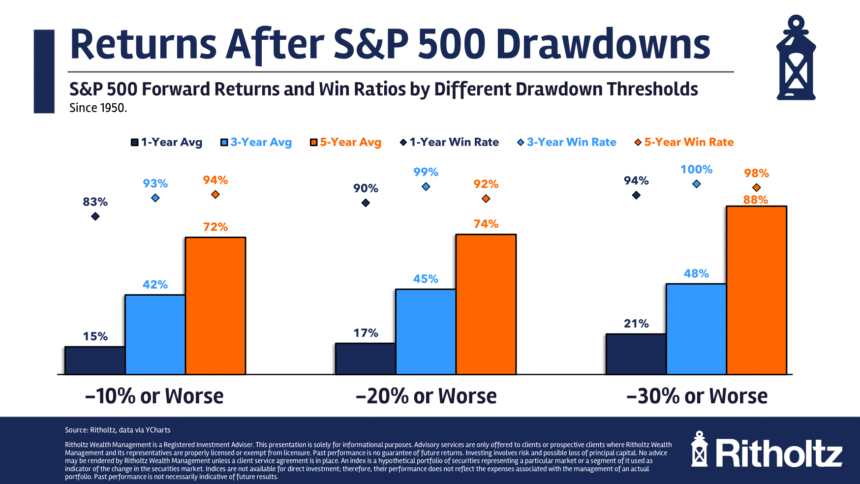
The findings are instructive for investors, as they reveal that despite the inevitable market downturns, there is a strong historical precedent for recovery. The data indicates that, on average, if an investor had purchased stocks during periods when the market closed down 10% or more, they could expect returns of approximately 15% in one year, 42% in three years, and 72% in five years. For those who invested after the S&P 500 declined by 20% or more, the average returns increase slightly, yielding 17% in one year, 45% in three years, and 74% in five years. When the decline reaches 30%, the average returns rise further, showing 21% in one year, 48% in three years, and an impressive 88% in five years.
The analysis emphasizes not just the average returns but also the win rates associated with these investment thresholds. While there are instances where markets remained down after such declines, these occurrences have been relatively uncommon. Historical trends suggest that most of the time, buying into a down market leads to eventual gains.
Current market conditions reveal that the S&P 500 is experiencing a decline of nearly 9% from its recent highs. Whether this phase develops into a more severe downturn or remains a typical market correction remains uncertain. The nature of long-term investing involves navigating through losses, but historically, these setbacks have often paved the way for future gains.
Investors are reminded that risk is an inherent component of investing; the possibility of loss is offset by the potential for higher returns. Thus, the willingness to manage this risk is crucial for successful long-term investment strategies. The findings underscore the importance of maintaining a long-term perspective in investing, as short-term volatility is usually offset by eventual recovery and growth.
While historical performance is not a guarantee of future results, the data serves as an important reminder of the resilience of markets over time. Investors are encouraged to seek professional advice for tailored guidance on their specific financial situations, as general performance trends may not apply universally.