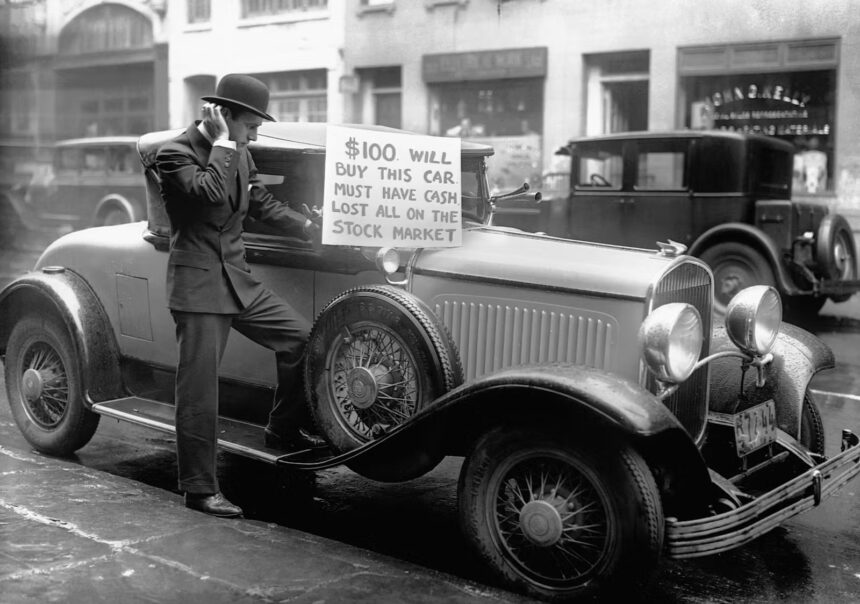
In the latest installment of Sherwood News’ Q&A series, Andrew Ross Sorkin, a prominent figure in financial journalism, discusses his new book, “1929,” which revisits the stock market crash of that year and the subsequent Great Depression. This follow-up to his bestselling work, “Too Big To Fail,” aims to draw parallels between past financial crises and current market dynamics.
Sorkin’s approach in “1929” is to weave together various historical documents—like court transcripts, personal letters, and newspaper articles—to present a nuanced narrative of the stock market’s collapse. He emphasizes that the second half of the book addresses how financial leaders navigated the Great Depression and the changes brought about by reforms under the New Deal, particularly the establishment of the Securities and Exchange Commission.
During the interview with Sherwood News, Sorkin reflects on the lessons modern investors can glean from the stock market of the late 1920s. He highlights the danger of overextending credit, pointing out that the issue of margin borrowing contributed significantly to the financial disaster of 1929. Sorkin illustrates this by noting that while the stock market was down only 17% by the end of 1929, those who bought on margin faced severe repercussions when market conditions soured.
Sorkin argues that the tendency to speculate is an inherent trait of American investing culture, fueled by optimism and the pursuit of innovation. However, he cautions that speculation without responsible guidance can lead to disastrous outcomes. Referring to the recent surge of retail investors in the stock market, he advises vigilance about the risks associated with new financial products and the potential pitfalls of margin trading.
The conversation also touches on the psychology surrounding the 1929 crash, with Sorkin dispelling common misconceptions. He asserts that the crash was not merely a singular event but a prolonged process exacerbated by a series of policy failures. These missteps by policymakers contributed to the economic downturn, leading to widespread unemployment and bank failures.
He expresses skepticism about whether current U.S. policymakers would allow a similar market plunge today, citing lessons learned from past crises. Sorkin notes that, unlike in 1929, contemporary responses include aggressive monetary policies designed to mitigate the fallout from market crashes. He warns, however, about the rising national debt and its potential to complicate future interventions, raising questions about the limits of government response to economic emergencies.
As Sorkin concludes, he reinforces the enduring relevance of historical financial lessons, reminding both seasoned and new market participants that the past can offer crucial insights for navigating today’s complex economic landscape. “1929” is now available in bookstores, encouraging readers to revisit the foundational events that shaped modern finance.