In a year marked by resilience, technology stocks are experiencing significant growth, as demonstrated by the Nasdaq Composite’s impressive 21% rise to date. Despite facing challenges such as trade tariffs and concerns over a potential artificial intelligence bubble, tech companies have managed to report strong earnings, stabilizing investor confidence.
Looking ahead, analysts predict a robust future for tech stocks, particularly driven by sustained spending on AI infrastructure. According to JPMorgan, the S&P 500 is expected to see average earnings growth of 13% to 15% over the next two years, attributed to what they term the “AI supercycle.” This bullish outlook indicates that stocks within the Nasdaq, particularly those identified within the “Magnificent Seven,” could see continued upward movement.
One standout player in the Nasdaq is Apple (AAPL), which has recently surged 58% since hitting a 52-week low in early April. This rise can be traced back to strong demand for its latest iPhones and an expanding services segment. As of now, Apple has a market capitalization of $4 trillion, with current trading at $273.96, a slight 0.59% increase for the day. They reported $416.1 billion in revenue for fiscal year 2025, reflecting a 6.4% increase from the previous year, while earnings per share grew by 23% to $7.46. Analysts forecast nearly 9% growth in revenue for the current fiscal year, projected to exceed $453 billion.
Despite challenges in the smartphone market, particularly due to rising costs for memory chips, analysts remain optimistic about Apple’s trajectory. Counterpoint Research has indicated that memory chip shortages may lead to a 7% increase in smartphone prices and a 2.1% decline in shipments. However, Apple, with an 18.2% share of the global smartphone market, benefits from bargaining power with suppliers and robust pricing strategies. The base price for Apple’s cheapest iPhone is already significantly higher than the average smartphone’s selling price, allowing the company some leeway against potential price increases.
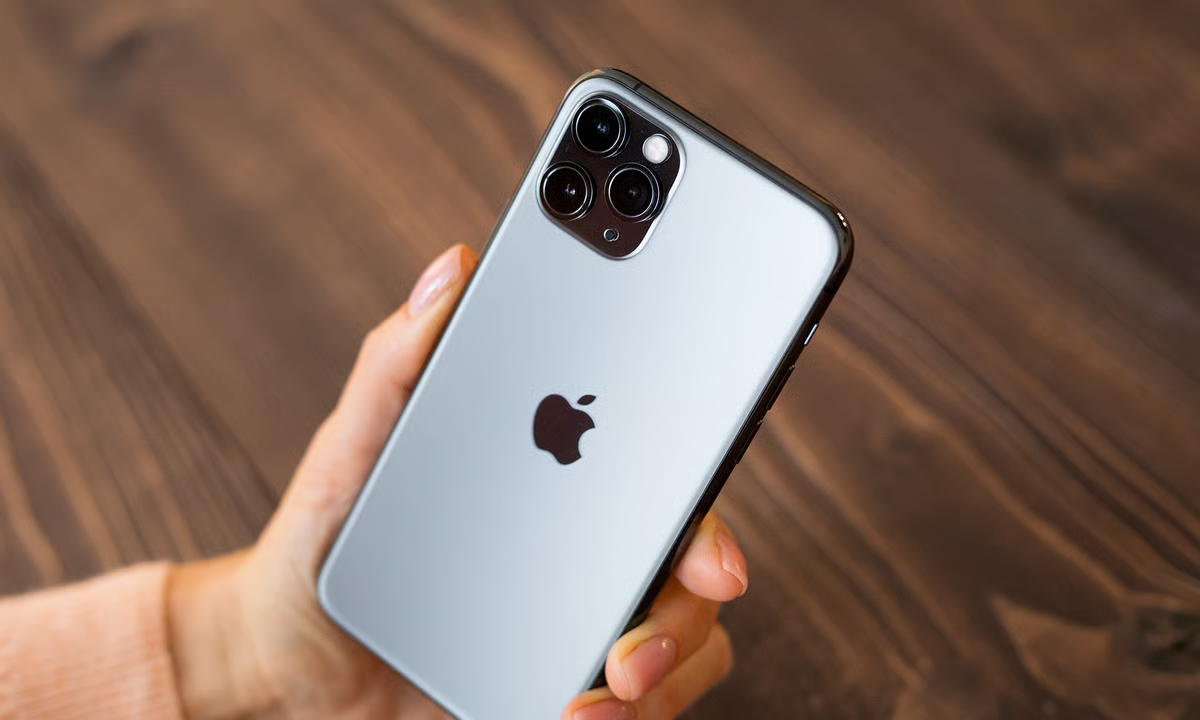
Significantly, demand for Apple’s iPhone 17 models is reportedly stronger than that for the previous year’s models, bolstered by a substantial installed base of older devices. Dan Ives of Wedbush noted that over 315 million iPhones in use are at least four years old, suggesting considerable upgrade potential as Apple is expected to ship 234 million units this year. Additionally, the anticipated launch of a foldable smartphone could align with the market’s projected 30% growth in that category next year, presenting an opportunity for a revenue boost.
Currently, Apple’s stock trades at 9.8 times sales, which compares favorably against the technology sector’s average price-to-sales ratio of 8.6. This slight premium seems justified given Apple’s potential for growth. If the company achieves a 10% increase in revenue next year, resulting in $458 billion, and trades at 10 times sales, its market capitalization could rise to $4.6 trillion—a considerable 14% gain.
Thus, given the favorable market conditions and Apple’s strategic positioning, there are strong indications that its stock will continue to perform well in 2026, making it an appealing investment opportunity for those looking to capitalize on the technology sector’s momentum.