Asian markets faced significant declines on Monday, with major stock indexes in Japan and South Korea plummeting by over 5%. This unsettling drop reflects investors’ growing concerns as the ongoing conflict in the Middle East reaches its fourth week. The volatility was exacerbated by President Donald Trump’s stern warning on Saturday, in which he threatened to “obliterate” Iran’s power plants should the nation fail to reopen the Strait of Hormuz, a crucial channel for global energy transport, within 48 hours.
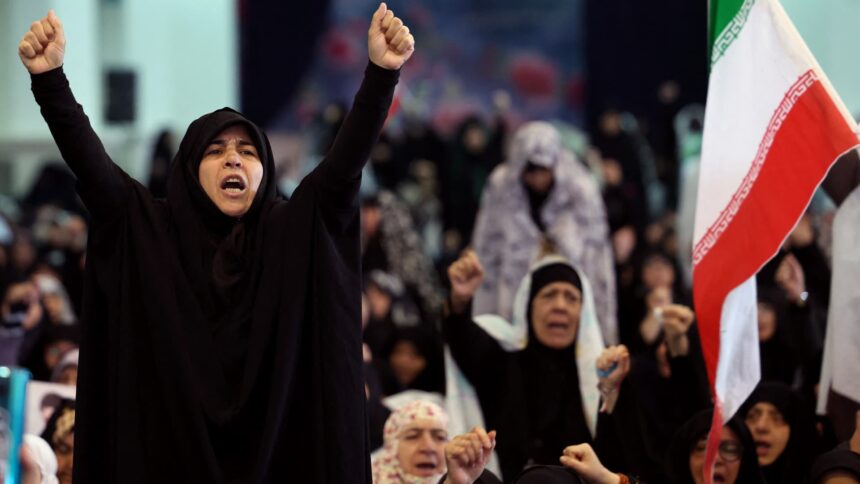
In response, Iran firmly rejected the ultimatum. Mohammad Bagher Ghalibaf, Iran’s Parliament speaker, threatened to retaliate against any attacks on the country’s power facilities by targeting energy infrastructure throughout the region. He stated that such actions would be viewed as legitimate targets, riskily suggesting that any damage would result in long-term energy price surges. His rhetoric extended to warning financial entities that hold U.S. Treasurys, characterizing them as potential targets for retaliation alongside military installations.
The impact of these tensions reverberated through global energy markets. Crude oil prices demonstrated notable fluctuations, with Brent crude rebounding to $112.68 per barrel—a 0.65% rise—while West Texas Intermediate (WTI) rose by 0.8% to $99. Goldman Sachs has notably adjusted its oil price forecasts upwards, now estimating that Brent will average $110 per barrel during March-April, an increase from previous predictions of $98. The bank indicated a scenario where oil flow through the Strait of Hormuz remains minimal, at just 5% of normal levels, for an extended period, emphasizing that the current situation might lead to sustained higher oil prices.
The widening gap between Brent and WTI prices, which exceeded $14 per barrel—the largest discrepancy observed in years—highlights the intensity of the current oil crisis, according to Chris Verrone, chief market strategist at Strategas Research. He warned that elevated oil prices might compel traders to plan for a more prolonged conflict in the region.
Japanese markets bore the brunt of the downturn, with the Nikkei 225 index falling nearly 5% and the broad-based Topix index dropping 4.4%. South Korea’s Kospi index experienced a disastrous drop of over 6%, leading to a temporary trading halt when the Kospi 200 futures index fell beyond the 5% mark. Australia’s S&P/ASX 200 index also declined by 2.4%, while Hong Kong’s Hang Seng Index and the mainland CSI 300 both opened close to 2% lower.
In the U.S., stock futures remained relatively stable overnight. The Dow Jones Industrial Average showed little change, while the S&P 500 dipped by 0.1% and Nasdaq Composite futures retreated by 0.2%. Last week, all three major indices concluded in the red, with the S&P 500 experiencing its first drop below the 200-day moving average since May, reflecting an unsettling trend in the market.
As analysts continue to monitor the geopolitical landscape and its influence on both energy prices and stock performance, the outlook remains uncertain, with many fearing the economic repercussions of ongoing conflicts in the Middle East.