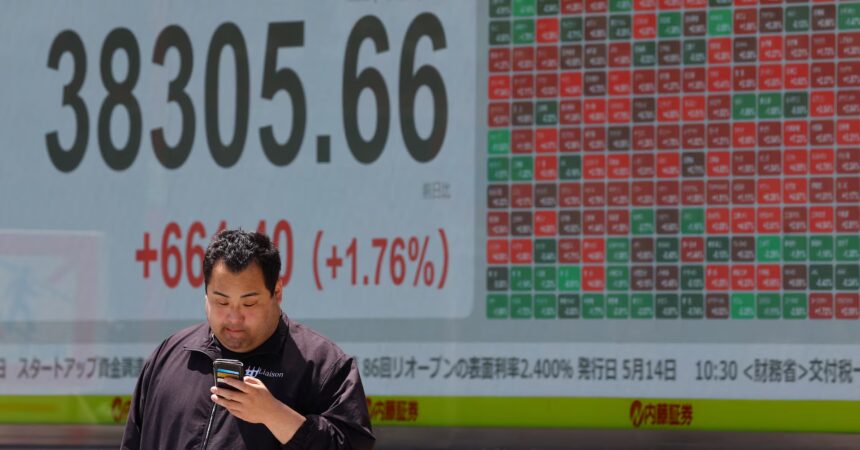
Asian stock markets experienced a substantial decline on Friday, contributing to a global selloff. This downturn was largely attributed to recent hawkish remarks from Federal Reserve officials, which dampened expectations of an interest rate cut in the U.S. next month. The MSCI index, reflecting a broad spectrum of Asian shares outside Japan, fell by 1.1%, following a significant drop in U.S. markets, where the S&P 500 recorded its most considerable one-day decrease in a month, snapping a four-day winning streak.
In the wake of these developments, U.S. Treasury yields also made a retreat as investors recalibrated their expectations around a rate cut in December, reducing the likelihood from 63% to roughly 51%. Shane Oliver, chief economist at AMP Capital, noted that the decline in U.S. shares highlighted a shift in sentiment regarding the Fed’s monetary policy, as recent comments from its officials raised concerns about the valuations of technology stocks and artificial intelligence firms.
The downward trend was pervasive across various markets. Japan’s Nikkei index dropped 1.5%, while Australia’s resource-oriented stocks fell by 1.4%. South Korea’s market saw a sharper decline of up to 2.8%. In China, major indices eased by 0.7%, as disappointing industrial production and retail sales figures for October surfaced, missing analysts’ projections and stifling any brief recoveries in equity valuations.
Chris Weston, head of research at Pepperstone, observed that the overall market drawdown was pronounced, offering little refuge for investors across asset classes. He emphasized the importance of forthcoming critical economic data from the U.S., which would be pivotal for Fed decision-making.
Adding to the uncertainty, the White House indicated that the unemployment data for October may remain unavailable, further complicating the economic outlook. Several Fed officials expressed their reservations regarding the merits of further rate cuts. Key comments from St. Louis Fed Bank President Alberto Musalem highlighted concerns about excessive accommodation, while Cleveland Fed President Beth Hammack affirmed the necessity of maintaining a restrictive interest rate policy to combat inflationary pressures. Minneapolis Fed President Neel Kashkari also conveyed skepticism about a December rate cut.
As a result of these developments, treasury yields continued to climb, with two-year yields stabilizing at 3.591%, while the 10-year yield rose to 4.1173%. Despite the rise in yields, the U.S. dollar suffered a minor setback, declining 0.1% against major currencies. The yen gained some stability, trading at 154.55 per dollar, recovering from a nine-month low. Conversely, the British pound weakened against the dollar, following reports that Prime Minister Keir Starmer and Finance Minister Rachel Reeves had abandoned plans to increase income tax rates.
In the commodities sector, oil prices saw a slight uptick, with Brent crude futures increasing by 1.6% to $64.07, although they remain on track for a third consecutive week of declines. Gold prices also rebounded, gaining 0.6% to reach $4,196.19 per ounce, despite having experienced a drop in the previous session.
The current financial landscape presents a challenging environment for investors, as they navigate a host of economic uncertainties and evolving market dynamics.