Shares across Asia showed an upward trend on Monday following a rebound on Wall Street, which successfully halted a three-day streak of losses while lessening the overall decline from the previous week. A pivotal release of factory data from China is anticipated for Tuesday, and a quarterly business sentiment survey by the Bank of Japan is expected on Wednesday.
Investors are also closely monitoring the potential for a government shutdown in the U.S., with a deadline looming this week. However, historical precedents suggest that such political deadlocks have had a relatively muted effect on the markets.
In the early hours of trading, U.S. futures indicated a positive trajectory, while oil prices experienced a decline. In Japan, the Nikkei index experienced a dip of 1%, closing at 44,892.52. In contrast, Chinese markets thrived, with Hong Kong’s Hang Seng index climbing 1.5% to reach 26,518.03, while the Shanghai Composite index inched up by 0.1% to 3,832.65. Australia’s S&P/ASX 200 rose 0.7% to 8,545.70, and South Korea’s Kospi surged by 1.3% to 3,430.57.
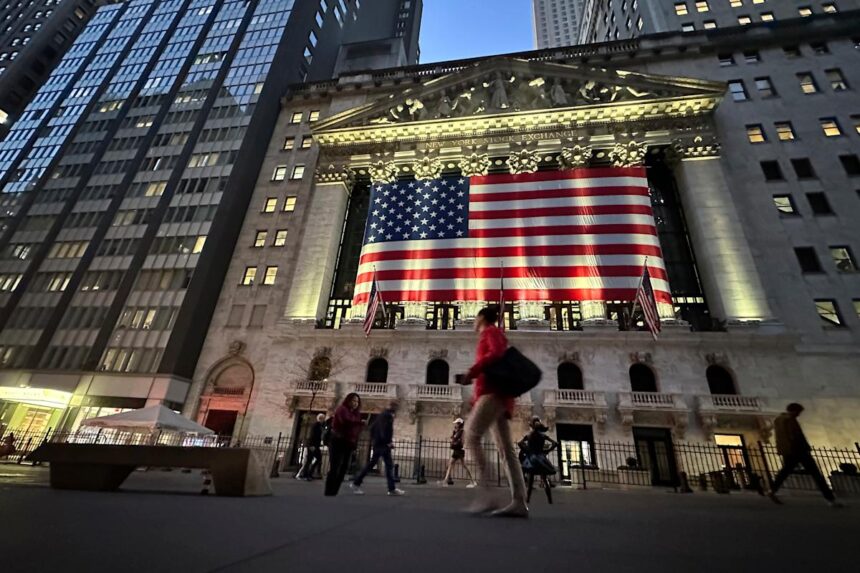
On Wall Street last Friday, despite earlier losses for the week, stocks rebounded after a report indicated inflation trends were aligning with economists’ forecasts, even though inflation levels remain elevated. The S&P 500 witnessed an increase of 0.6%, closing at 6,643.70. Meanwhile, the Dow Jones Industrial Average rose 0.7% to 46,247.29, and the Nasdaq composite adding 0.4% to finish at 22,484.07. All three major indexes approached their all-time highs set earlier in the week.
Analysts noted that inflation in the U.S. had increased to 2.7% last month from 2.6% in July, based on the measure preferred by the Federal Reserve. Although this figure exceeds the Fed’s target of 2%, it was in line with economists’ predictions, igniting hope that the Fed could implement additional interest rate cuts to bolster the economy. The Federal Reserve had recently executed its first rate cut of the year but offered no promises for further reductions, concerned that additional cuts could exacerbate inflationary pressures.
Further complicating the economic landscape, consumer sentiment in the U.S. appeared weaker than anticipated. A survey conducted by the University of Michigan revealed growing frustration among consumers regarding high prices, though their inflation expectations for the next year decreased slightly from 4.8% to 4.7%.
Compounding the inflation challenges are new tariffs announced by President Donald Trump, which will apply to imports of various goods, including pharmaceuticals and heavy trucks, starting on October 1. The ambiguity surrounding these tariffs left analysts uncertain about their overall impact, leading to only minor effects on the stock market. Notably, Paccar, a leading manufacturer of trucks, saw its shares jump 5.2%, while major pharmaceutical companies like Eli Lilly and Pfizer also recorded gains.
In early trading on Monday, U.S. benchmark crude oil dropped by 49 cents, settling at $65.23 per barrel, while Brent crude slipped by 42 cents to stand at $68.80 per barrel. Concerns over a potential increase in production limits from OPEC plus oil-producing nations contributed to apprehensions regarding oversupply. The U.S. dollar weakened, trading at 148.93 Japanese yen, down from 149.51 yen, while the euro appreciated to $1.1727 from $1.1703.