The Australian dollar (AUD) has kicked off the year with remarkable momentum, gaining for the fourth consecutive week and briefly surpassing its April low by over 20%. This surge signifies a strong performance amid a complex economic landscape. However, market analysts are beginning to notice signs of potential exhaustion in the currency’s upward trajectory.
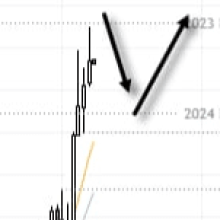
Technical indicators, such as upper wicks on the weekly chart, suggest that while the AUD has made impressive gains, the strength of the rally may be waning. Stretching momentum readings indicate that the currency could be reaching a peak, and an increase in geopolitical risks adds to the uncertainty surrounding its future performance. As these risk factors mount, the sustainability of the upward trend is being questioned.
The expectations surrounding the monetary policies of the Reserve Bank of Australia (RBA) and the Federal Reserve (Fed) are finely balanced at this time. Investors are closely monitoring these central banks’ stances, which could heavily influence the Australian dollar’s movement. As a result, analysts warn that the AUD’s rally may face challenges ahead, potentially leading to increased market volatility rather than a straightforward climb.
In the early part of the week, the Australian dollar showed solid gains against most major currencies, with the notable exception of the Japanese yen and Swiss franc. Despite the positive momentum, the prospect of a choppy trading environment looms large, as traders anticipate that the AUD may struggle to maintain its upward momentum amidst the evolving economic landscape and geopolitical tensions.
Overall, while the Australian dollar has delivered strong performance thus far, the emerging signs of fatigue indicate that investors should tread carefully, as future upward movements may become increasingly difficult to achieve.