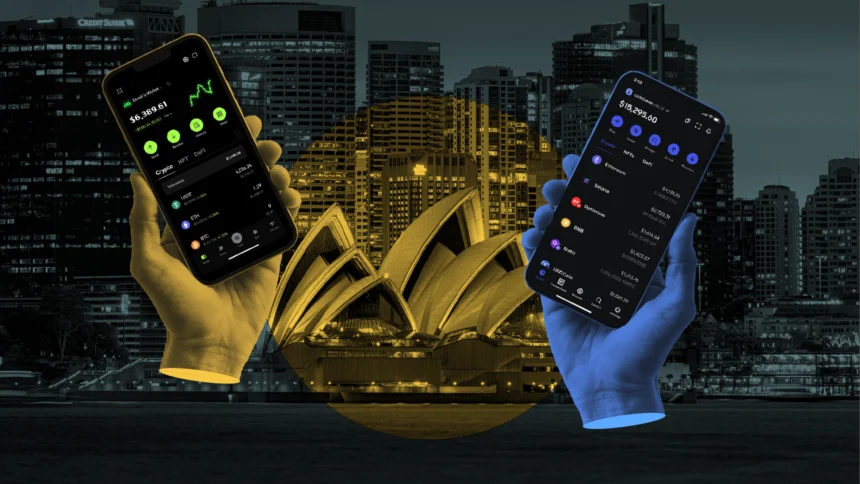
Australia’s retirement savings system, a significant player on the global financial stage, currently oversees a staggering AUD 2.8 to 4.3 trillion. This vast pool of capital is not only substantial in size but is increasingly seen as an untapped market for cryptocurrency investment, particularly through Self-Managed Super Funds (SMSFs).
Coins behemoths Coinbase and OKX are strategically positioning themselves to capture this emerging opportunity by rolling out tailored products specifically designed for SMSFs. These offerings include essential custody, compliance, and reporting tools, simplifying the complex process of investing in cryptocurrencies for trustees who manage their own funds.
The allure of the Australian market for cryptocurrency investment stems from several factors. First, the regulatory environment is gradually evolving toward greater clarity, helping to reduce the risks for service providers. Furthermore, there has been a notable increase in the adoption of SMSFs among Australians, particularly younger investors who are looking for ways to diversify their portfolios beyond traditional asset classes. Data shows that SMSFs have significantly ramped up their cryptocurrency holdings, witnessing an approximate sevenfold increase since 2021, rising to around AUD 1.7 billion as of March 2025.
While there is a strong appetite for crypto within SMSFs, barriers remain. Cryptocurrency is notoriously volatile, and SMSF trustees have a fiduciary responsibility to safeguard their members’ retirement funds. This makes exposure to significant price fluctuations a concern. Moreover, the compliance landscape can be intricate, involving meticulous record-keeping, audits, and adherence to regulatory requirements, which may deter some trustees from venturing into crypto investments.
Coinbase and OKX are addressing these challenges head-on. By launching SMSF-specific products equipped with necessary compliance and operational infrastructure, these exchanges aim to alleviate the administrative burdens typically faced by trustees. Early signals of demand, such as waiting lists for their products, suggest a robust market exists for such services.
Despite the potential for growth, it’s inaccurate to expect explosive adoption. The current landscape suggests a more gradual integration of cryptocurrencies into SMSFs, with initial allocations likely remaining modest—around 1% to 5% of total assets. However, as smaller SMSFs gather experience and establish a track record with cryptocurrency investments, there may be increasing pressure on larger super funds to follow suit, either directly or through products like ETFs.
The path forward will also depend on the regulatory landscape. Should governments and regulatory bodies witness responsible financial behavior within the crypto sphere, the potential for more accommodating policies could arise. This may include clearer guidelines or perhaps more significant endorsements of cryptocurrency exposure within retirement funds.
The rapid evolution of the SMSF market and its burgeoning interest in cryptocurrency present a noteworthy intersection for traditional finance and digital assets. If handled judiciously, this could pave the way for a broader acceptance of crypto within global retirement savings frameworks, making Australia a potential case study for other regions looking to address the integration of digital assets into pension systems.
As developments unfold, key indicators to observe include the percentage of SMSF assets allocated to cryptocurrency, the growth in the number of SMSFs utilizing crypto services, and updates from regulatory bodies concerning crypto investments. The ongoing relationship between larger super funds and SMSFs will also play a crucial role in shaping the future of crypto in Australia’s retirement landscape.