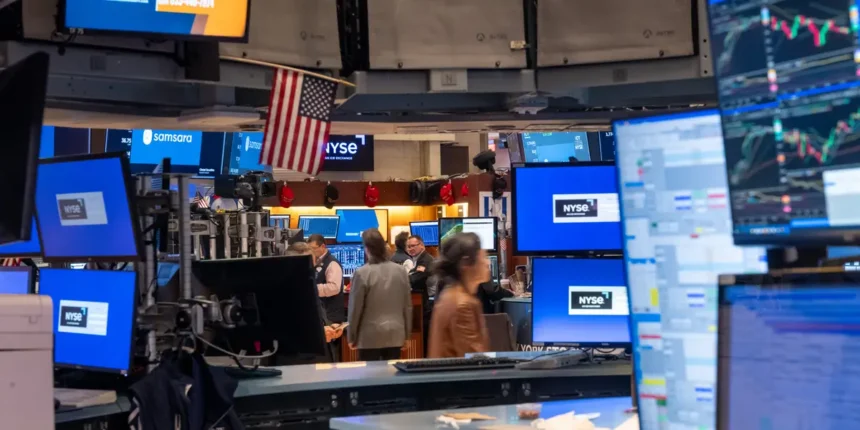
Another year has brought another double-digit gain for the S&P 500, yet Bank of America warns of emerging risks that could threaten the recent rally powered primarily by artificial intelligence (AI). Since the market’s low in October 2022, investor enthusiasm surrounding AI has significantly bolstered stock performance, with numerous companies committing to ambitious capital expenditure plans. However, analysts at Bank of America caution that the increasing fervor for AI could be concealing vulnerabilities within the market.
The S&P 500’s current valuations, according to Bank of America, suggest that the index is presently overvalued, even exceeding the highs seen during the tech boom of the 1990s. While acknowledging that the leading companies are financially healthier and bear less debt compared to previous years, the analysts outline several risks that investors should pay attention to.
First and foremost, they note the early signs of a bear market even in the face of current growth. Savita Subramanian, leading the team of analysts, highlighted that several concerning indicators, including price-to-earnings (PE) ratios and stock performance comparisons, have tripped a warning signal. Historically, when 70% of similar indicators signal caution, it has often precede a peak in the market. Currently, 60% of these signals are showing warning signs.
The second concern revolves around the paradox between the AI boom and consumer resilience. As AI technology evolves, companies may increasingly replace white-collar jobs—positions that have traditionally contributed to strong consumer spending. This led Bank of America to downgrade its rating in the consumer discretionary sector, as the potential for workforce reductions could dampen consumer spending.
Third, the analysts raised alarms regarding the complex intersect between major corporations, private companies, and government intervention in stock markets. Government investments in stocks, while not new, are often more indicative of bailouts than strategic growth initiatives. This intertwining relationship, while potentially bullish in the long term, adds layers of complexity to market dynamics.
Fourth, macroeconomic uncertainty poses another significant risk. The analysts noted a “macro fog” characterized by tariff impacts and a lack of fresh economic data amid a government shutdown. The recent tension in US-China trade relations and the potential for a government shutdown have created an environment of constrained visibility, likely leading to a slowdown in economic activity.
Lastly, concerns are emerging in the private credit market, with analysts referring to comments from notable financial figures regarding potential pitfalls facing regional banks and borrowers. Recent reports of problems among borrowers have intensified credit concerns, raising fears of further issues. Despite the seemingly solid footing of regulated banks, the analysts warn that the potential for liquidity issues may make the S&P 500 vulnerable.
In summary, while the S&P 500 has enjoyed remarkable gains due to enthusiasm for AI, analysts at Bank of America are raising flags about a range of risks that could derail the market’s upward trajectory. Investors are advised to remain vigilant as these complexities unfold.