Beef prices in the United States have surged to alarming levels, triggering a political outcry and drawing the attention of former President Donald Trump, who has long downplayed inflation concerns. With prices rising sharply for ground beef and steaks—12.9% and 16.6% respectively over the past year—Trump has called on ranchers to lower cattle prices, aiming to fulfill his promise of reducing grocery bills for Americans. However, his approach has faced significant backlash from ranchers, who argue that his proposals could harm their livelihood without effectively addressing grocery costs.
The number of beef cattle farmers and ranchers has been declining for decades, resulting in a significant drop in domestic supplies. The U.S. cattle inventory is currently at its lowest in nearly 75 years, with over 150,000 ranches disappearing since 2017—a 17% decline, according to the Agriculture Department. Ranchers are contending with high feed and operating costs, exacerbated by a four-decade consolidation among meat processors that have significantly shrunk their bargaining power. Drought conditions have further diminished cattle herds, leading to a tighter market and escalating prices.
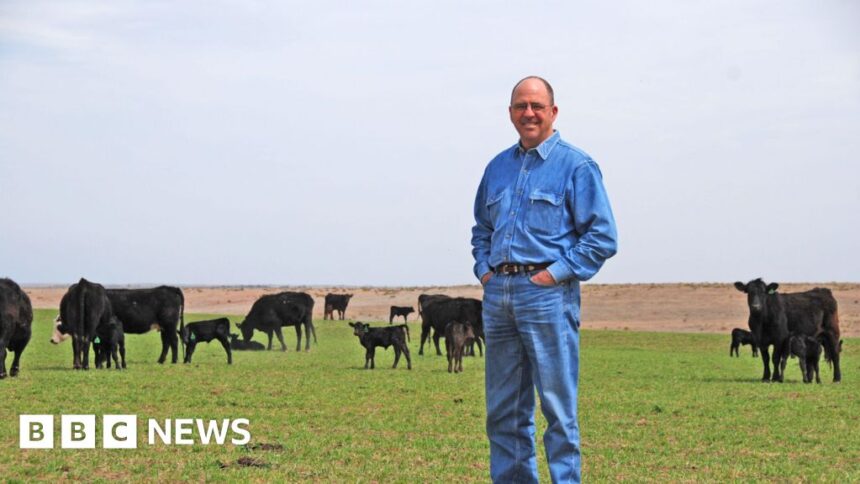
Prominent ranchers, including Christian Lovell and Mike Callicrate, have spoken out against the current state of the market. Lovell recalls how his farm’s once-fertile grazing land has dried up, forcing him to reduce herd sizes. Callicrate has responded by establishing his own direct-to-consumer sales channels, yet he acknowledges that most ranchers lack the resources to make similar changes.
The recent hike in beef prices has outpaced average food inflation, which has remained around 3.1%. Experts like Brenda Boetel and Derrell Peel indicate that the cattle herd’s decline is likely to keep prices elevated for the foreseeable future, given the years it takes to rebuild cattle populations.
Amidst these challenges, the Agriculture Department proposed a “big package” to increase domestic beef production by improving access to grazing lands and supporting smaller meat processors. This came shortly after concerns were raised about Trump’s proposal to import more beef from Argentina, which some saw as a direct threat to American ranchers. Even the National Cattlemen’s Beef Association, traditionally viewed as an ally of Trump’s administration, criticized the import plan for potentially creating instability in the market.
To many in the industry, a call for increased beef imports seems counterproductive, as it would primarily benefit a few large meat packers, which dominate over 80% of the beef processing market. Experts claim these firms have historically engaged in practices that inflate prices for both ranchers and consumers. While Trump’s administration has attempted to address competition issues in agriculture, the revocation of measures aimed at tackling corporate consolidation has left many ranchers skeptical.
Bill Bullard, CEO of R-CALF USA, who has witnessed the industry change over several decades, echoes these sentiments. He notes that while cattle prices have seen a recent uptick, ranchers are still hesitant to expand their herds due to a lack of confidence in the market’s integrity, largely a result of relying on a few powerful meat packers. Bullard criticizes Trump’s focus on superficial solutions rather than addressing the root causes of the industry’s challenges, stating that true reform is necessary to restore ranchers’ faith in the market and incentivize growth in herd sizes.