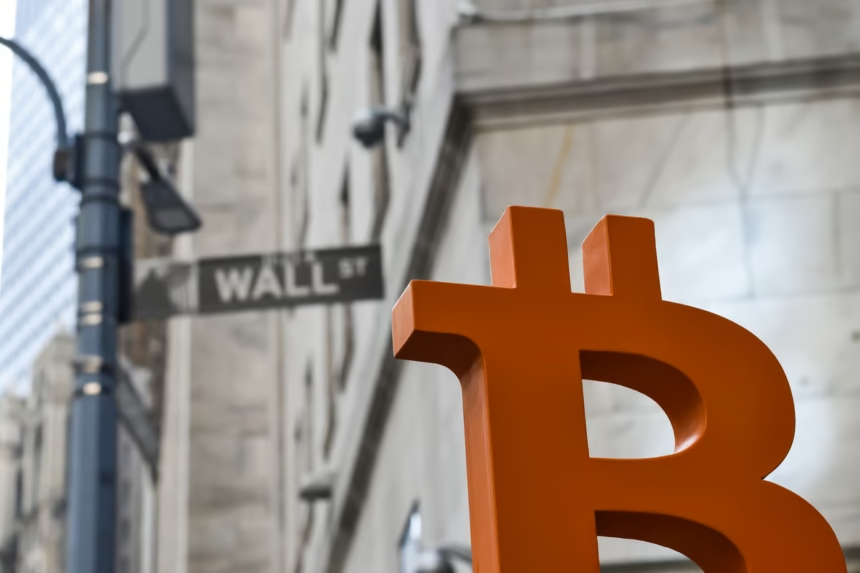
As analysts reassess their projections for Bitcoin’s trajectory, one prominent Wall Street investment firm stands out with a bullish outlook. Bernstein has forecasted that Bitcoin could reach an astonishing $150,000 by the end of the year, even as many in the market temper their expectations for 2026. This optimistic view is predicated on Bitcoin’s potential to surge by 120% within the same timeframe.
Historically, Bitcoin has navigated numerous cycles of growth and decline. Typically, the cryptocurrency experiences three years of price appreciation followed by a year of significant downturns. Past patterns have shown Bitcoin’s value dropping by over 50% at four-year intervals, evidenced during 2014, 2018, and 2022. Presently, apprehensions loom over Bitcoin’s future, as market sentiment appears considerably subdued.
As of now, Bitcoin is trading around $60,825 with a market capitalization of approximately $1.4 trillion. The current volatility shows a range between $67,836.00 and $68,637.00 just in today’s trading, demonstrating the fluctuations inherent in its valuation. However, Bernstein’s analysis suggests that the current climate represents what they term “the weakest bear case in history.” Unlike previous downturns characterized by widespread insolvencies and failures, this phase seems more rooted in a “crisis of confidence.”
Moreover, indicators of market anxiety have surfaced, exemplified by the Crypto Fear & Greed Index, which recently plummeted below 10, signaling panic among investors. Historically, shifts from “extreme fear” to more positive sentiment, marked by indices reaching readings of 20 or higher, have preceded sharp increases in Bitcoin’s value.
Institutional interest in Bitcoin remains resilient, with major asset managers and institutional players continuing to integrate Bitcoin into their portfolios. Large Wall Street firms are launching new Bitcoin-related products, and there is a resurgence in net inflows to spot Bitcoin exchange-traded funds (ETFs). Additionally, corporate treasury departments persist in acquiring Bitcoin, albeit at a reduced pace.
Amid this backdrop, Bernstein maintains that Bitcoin’s overarching investment thesis remains robust. The cryptocurrency has consistently been one of the top-performing assets over the last decade, delivering exceptional returns and demonstrating exponential growth over the past 15 years.
However, there is a notable shift in Bitcoin’s perception as a safe-haven asset. Just a year ago, many hedge fund managers were promoting Bitcoin as a reliable store of value comparable to gold. Recently, however, gold has surged, evidenced by the performance of the iShares Gold Trust, while Bitcoin has experienced a downturn. This divergence suggests a movement of capital from Bitcoin to gold, prompting Bernstein to observe that Bitcoin has begun to trade more like a “liquidity-sensitive risk asset.”
Looking ahead, there is an expectation that market sentiment around Bitcoin will pivot significantly by mid-2026. If Bitcoin can maintain its current stability over the coming months, there is optimism that it could double its value and reach the ambitious target of $150,000 by year’s end.