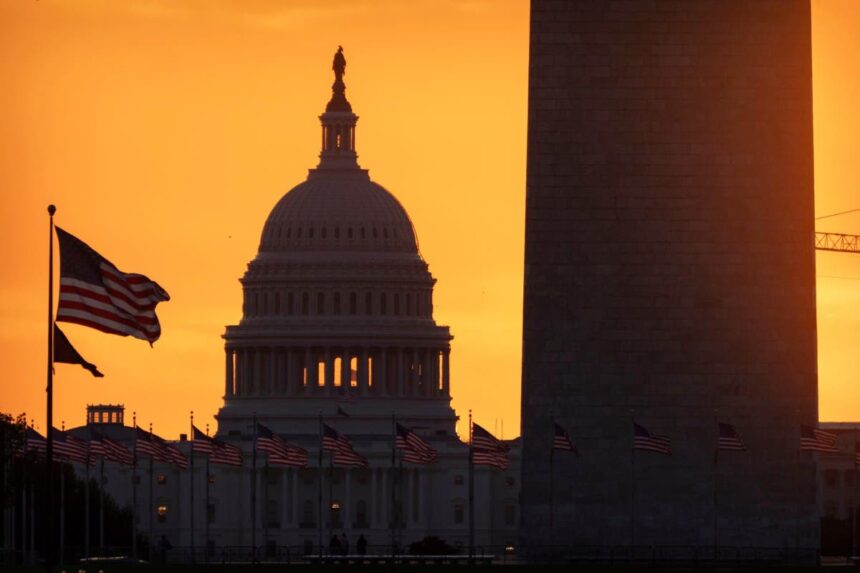
As the federal government entered a shutdown early Wednesday, bettors on the prediction market Polymarket have turned their attention to the potential duration of the impasse, with nearly half forecasting it will extend beyond two weeks. The shutdown occurred after the Senate failed to pass a funding bill late on Tuesday, with both parties blocking each other’s proposals during consecutive votes. This marks the first government shutdown since the 35-day lapse that took place during President Donald Trump’s first term in 2018-2019.
In response to the shutdown, federal agencies are implementing contingency plans, leading to service reductions and the furloughing of thousands of employees. Many federal workers will face delayed paychecks, and some will be required to continue working without compensation. Essential services, such as Social Security, will remain operational; however, staffing shortages could hinder service delivery.
On Polymarket, bettors have wagered around half a million dollars on the shutdown’s duration. Approximately 47% of participants believe the shutdown will not conclude until October 15 or later, with varying predictions among the rest. Eight percent anticipate a shorter duration of just a few days—ending between October 3 and 5—while 22% believe it will wrap up between October 6 and 9, and another 22% think it will conclude between October 10 and 14. The outcome hinges on the ability of congressional members to compromise on a funding deal.
The stalemate largely stems from disagreements over health care funding, particularly regarding Democratic calls to extend Affordable Care Act tax credits and avoid cuts to Medicaid. Republicans have opposed these provisions, favoring a “clean” short-term funding bill that lacks these controversial elements.
Political leaders have vocalized their frustrations over the impasse on social media. Senate Majority Leader John Thune stated, “Democrats may have chosen to shut down the government tonight, but we can reopen it tomorrow. All it takes is five Democrats to join Republicans to pass the clean, nonpartisan funding bill that’s in front of us.” In contrast, Senate Minority Leader Chuck Schumer accused Republicans of intentionally causing the shutdown rather than addressing pressing health care needs.
Experts are sounding the alarm over the potential consequences of a prolonged shutdown. D. Stephen Voss, a political science professor at the University of Kentucky, remarked that a lengthy shutdown could severely disrupt access to government services and resources, potentially leading to a political backlash, as history has shown both parties are typically averse to enduring shut downs.
Amid these tensions, various officials have weighed in with their perspectives. The U.S. Air Force indicated in a social media post that their website would not be updated due to the shutdown. Former Vice President Kamala Harris condemned the situation, stating, “President Trump and Congressional Republicans just shut down the government because they refused to stop your health care costs from rising.” Meanwhile, House Speaker Mike Johnson accused Democrats of holding the government “HOSTAGE” for their healthcare agenda, while House Minority Leader Hakeem Jeffries argued that Democrats are fighting to protect essential health care services.
Looking ahead, any funding measure would require a supermajority of 60 votes to pass. Neither party was able to secure this level of support during the recent votes, with Republicans holding 53 seats, Democrats having 45, and two independents caucusing with the Democrats. The path forward remains uncertain as both sides continue to grapple with their competing priorities.