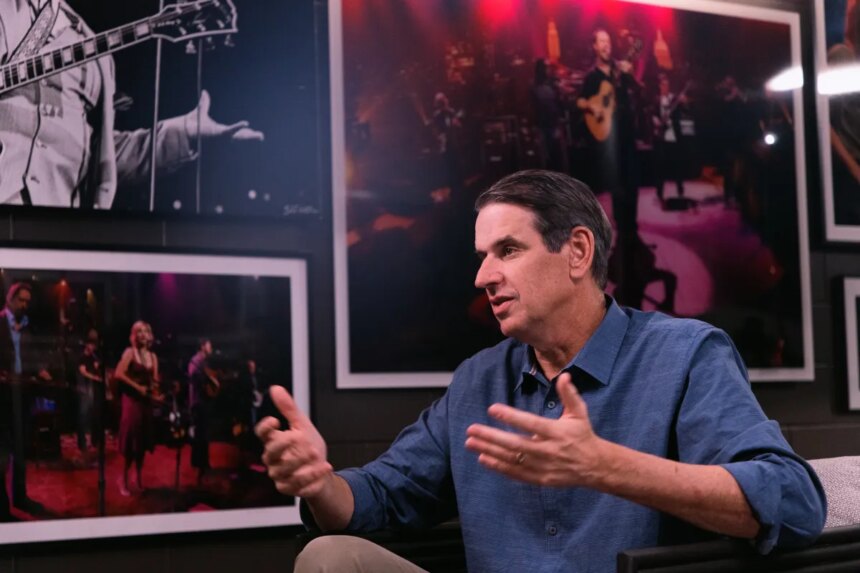
For nearly three decades, Bill Gurley has emerged as one of Silicon Valley’s most influential figures. As a general partner at Benchmark, he made early investments in transformative companies like Uber, Zillow, and Stitch Fix, significantly shaping the landscape of modern venture capital. Recently relocating to Austin and stepping back from hands-on investing, Gurley is redirecting his iconic pattern-recognition skills into new initiatives, including a book, a foundation, and a policy institute focused on challenges he feels he can impact.
His forthcoming book, “Runnin’ Down a Dream,” serves as more than just a nod to Tom Petty; it proposes that pursuing one’s passion is not merely a romantic notion but a crucial competitive strategy, especially amid the rapid advancements in AI that are altering the workforce. To complement this, he has established the Running Down a Dream Foundation, which aims to provide 100 grants of $5,000 annually to individuals in need of financial support to pursue their dreams.
In a recent conversation with Gurley, he shared insights about his motivations for writing the book, his thoughts on how some tech veterans now wield significant influence in Washington, and perspectives on the emerging 996 work culture adopted by some young entrepreneurs.
Gurley explained that his inspiration for the book stemmed from an extensive exploration of biographies across diverse fields. Observing recurring themes led him to compile his findings, which crystallized during a talk at the University of Texas that garnered attention on YouTube. He realized that his own transition away from venture capital provided a unique opportunity to engage with broader societal issues, far removed from the specific narratives of his previous investments.
One surprising revelation in his research conducted with Wharton showed that around 60% of people desire to make different choices if afforded a chance to restart their careers. Gurley emphasized the difficulty of recognizing time’s value when young, suggesting that many individuals later reflect on the “regrets of inaction,” which resonates universally across cultures. He noted that parents often prioritize economic stability over encouraging exploration of passions, a decision that may not align with the fast-evolving demands of the job market, particularly with AI on the horizon.
Addressing the challenges faced by those living paycheck to paycheck, Gurley highlighted that pursuing one’s passion doesn’t require an abrupt exit from stable employment. He advised individuals in precarious financial situations to utilize their free time to carefully consider their aspirations and prepare for the future. The foundation’s grants are intended as a safety net for those ready to take the plunge but lacking the funds to do so.
Gurley also shared his critique of regulatory capture—a phenomenon where substantial corporations utilize regulation to reinforce their market position. He expressed apprehension over AI companies seeking regulation as a form of self-preservation and raised concerns about the implications of fragmented state-level regulations in AI in a global context.
On the topic of the surreal political landscape where former tech leaders now hold substantial sway, Gurley noted the irony of their influence in crafting policies related to technology. He questioned the motivations behind the demand for regulation from industries that could benefit from it most, further complicating the discussion around responsible AI deployment.
When discussing the recent revival of a rigorous work ethic reminiscent of the “996” culture, Gurley voiced an appreciation for the renewed intensity among Silicon Valley founders. He acknowledged that pandemic-era complacency may have contributed to a softening of work cultures, while asserting that relentless pursuit of passion—akin to the dedication seen in athletics or the arts—should be celebrated within entrepreneurship.
Gurley emphasized the importance of mentorship, warning against the common misconception that aspiring professionals should only seek out highly successful individuals. Instead, he advocated for identifying attainable mentors who can offer guidance and potentially be flattered by such requests.
Finally, reflecting on the implications of AI, Gurley recognized that traditional career paths—characterized by recruiter-led processes—might seem precarious amidst AI advancements. However, he championed the idea of carving out unique paths, leveraging the educational resources available today, and positioning oneself as a “candidate of one” in a rapidly evolving landscape. In his view, proactive engagement with AI will ultimately be a force multiplier for those willing to embrace it.