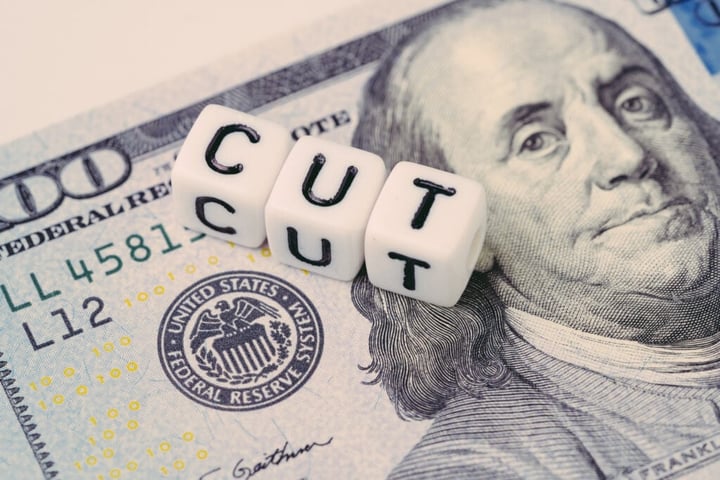
The Federal Reserve concluded 2025 with its third consecutive 25 basis points rate cut, which initially sparked a brief surge in optimism for cryptocurrencies like Bitcoin (BTC) and Ethereum (ETH). However, the enthusiasm faded quickly as the market reversed its gains.
On-chain analytics platform Santiment highlighted that while lower interest rates generally boost risk assets by increasing market liquidity and diminishing the dollar’s value, retail sentiment peaked just before the Fed’s announcement. This behavior set the stage for a classic “buy the rumor, sell the news” scenario, leading to a sharp market pullback.
In a dramatic turn, volatility heightened after a major investor, colloquially known as a whale, divested $100 million in Bitcoin mere minutes before Chairman Jerome Powell’s speech. Despite the heightened activity, the Fed’s decision was largely expected, with officials reiterating their assessment of moderate growth and persistent inflation, indicating that future policy adjustments would remain data-driven.
Though the market faces sharp fluctuations, the overarching macro environment appears to favor cryptocurrencies. Notably, Bitcoin’s performance has significantly lagged compared to equities and gold throughout the year, suggesting the potential for a significant catch-up rally as liquidity conditions improve. Indicators of smart-money activity show that wallets holding between 10 and 10,000 BTC have accumulated over 42,000 BTC since late November, hinting at strategic positioning for a stronger performance in 2026.
Retail sentiment remains divided: Bitcoin traders exercise caution, while Ethereum traders jumped into the post-FOMC rally only to be met with an immediate downturn following whale activity. This pattern reflects a common scenario where retail investors chase headlines while larger market players control trading momentum. Although short-term volatility is anticipated, the combination of multiple rate cuts, enhanced liquidity, and growing investor confidence cultivates a more favorable environment for Bitcoin and the broader cryptocurrency market moving into 2026.
A key transition in the Federal Reserve’s liquidity strategy occurred between October and December. After slowing its balance-sheet runoff in October, the Fed reversed its stance in December, deeming reserves too low and reinstating Treasury bill purchases. Concurrently, the labor market showed signs of softening, with increasing unemployment pressures acknowledged by the Fed.
In a broader context, investors are looking to build resilient portfolios by diversifying beyond single assets or markets. As economic cycles evolve, many seek to access various investment platforms that offer opportunities in real estate, fixed-income products, and alternative asset classes.
Platforms such as Arrived Homes enable investors to partake in real estate investments with minimal initial investments. For those interested in fixed-income returns, Worthy Property Bonds provides interest-bearing bonds with appealing liquidity. Investors desiring more control over their retirement could consider options like IRA Financial, which allows investment in alternative assets.
Moomoo is not only a trading platform but also attracts new users with 8.1% APY on uninvested cash. In contrast, American Hartford Gold simplifies the acquisition of physical gold and silver for retirement accounts, catering to conservative investors focused on wealth preservation during market uncertainty.