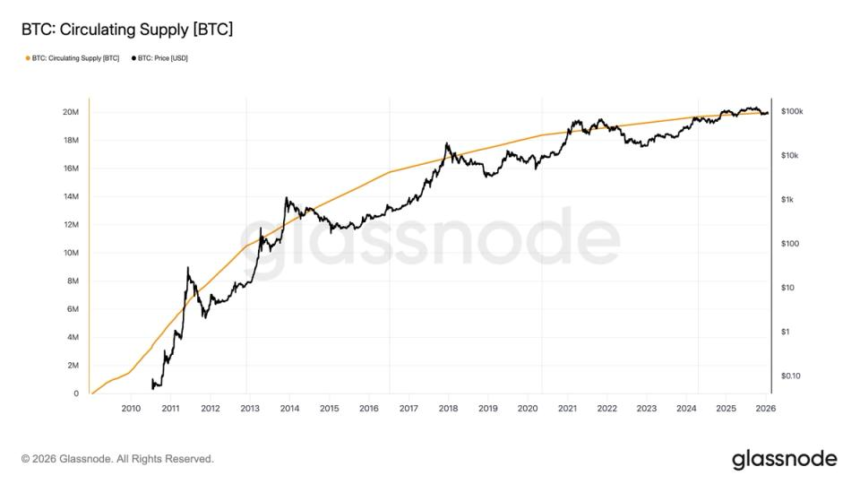
Bitcoin is on the verge of a significant milestone, as it approaches the issuance of its 20 millionth coin. Current data from the Clark Moody Dashboard indicates that approximately 19,996,979 BTC have already been mined, leaving around 3,000 BTC until the symbolic threshold is achieved. At the current mining pace, this milestone is projected to be reached in about a week.
Crossing this milestone means that over 95% of Bitcoin’s fixed supply of 21 million coins will be in circulation, with only 1 million remaining to be mined over the next century. The 21 million cap was hardcoded into Bitcoin’s protocol by its pseudonymous creator, Satoshi Nakamoto, as a method to ensure absolute scarcity—distinguishing it from fiat currencies that can be freely expanded by central banks.
While Satoshi never provided a detailed rationale for the specific figure of 21 million, the fixed limit fosters credibility through predictable supply. For Bitcoin advocates, or maximalists, this cap serves as a foundational principle. Proposals to modify it are often met with resistance, as they are perceived to undermine Bitcoin’s value proposition as “hard money.”
The narrative of Bitcoin’s scarcity is frequently likened to that of gold or oil. However, unlike commodities, Bitcoin’s supply cannot be adjusted in response to price changes, making its issuance process both transparent and immutable. This supply is structured to diminish over time through “halvings,” which occur approximately every four years and cut the rewards miners receive for validating transactions. This system highlights a significant drop in inflation rates, which currently stand below 1%. Presently, about 450 BTC are mined daily, and projections suggest that 99% of Bitcoin’s total supply will be mined by January 2035.
The last full Bitcoin is expected to be mined around the year 2105, with fractional issuance anticipated to continue until approximately 2140. Eventually, miners will depend solely on transaction fees for their revenue. For supporters of Bitcoin, the approach to the 20 million milestone reinforces the narrative of scarcity as the new supply steadily diminishes. For miners, it highlights the long-term transition towards a fee-driven revenue model, which will play a crucial role in determining both the network’s security and its overall economics.