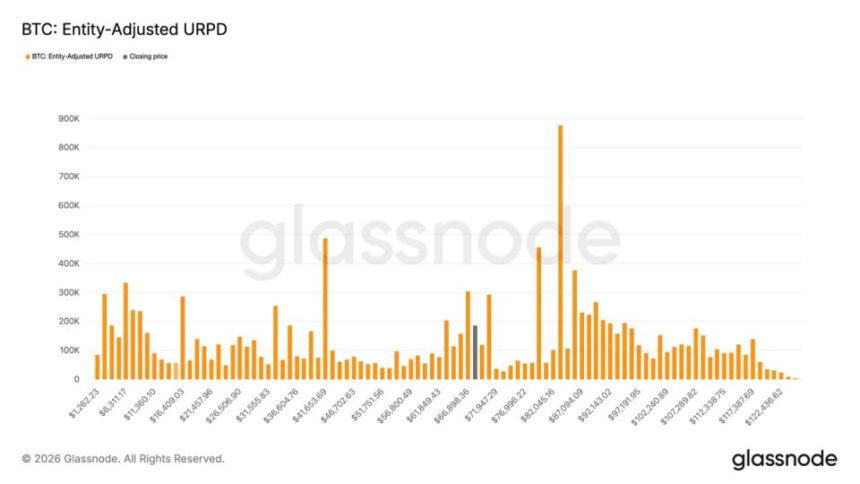
Bitcoin has made headlines once again as it surged to nearly $72,000, bringing attention back to a unique phenomenon known as the “air pocket.” This term describes a specific price range between $72,000 and $80,000 where the cryptocurrency has previously changed hands only infrequently. According to data from Glassnode, a mere 1% of the circulating Bitcoin supply is currently located within this price zone.
The significance of this low supply in the specified range suggests the potential for minimal resistance as Bitcoin’s price rises. If it eventually surpasses the $72,000 mark decisively, analysts believe that the journey towards $80,000 could happen swiftly due to the lack of previous trading activity in that area.
Bitcoin’s historical behavior supports this analysis; the cryptocurrency has spent very little time within the $72,000 to $80,000 bracket in the past. Notably, in November 2024, following Donald Trump’s victory in the U.S. presidential election, Bitcoin experienced a rapid ascent through this price range without establishing much in the way of trading volume. Earlier this year, the coin fell from approximately $80,000 to $70,000 by the end of January, subsequently dropping to around $60,000 by early February—a decline that transpired over just a few days.
The dynamics in supply are clearly illustrated through Glassnode’s Realized Price Distribution (URPD) metric. This tool tracks the price points at which unspent transaction outputs were last transacted, effectively revealing the acquisition prices for current Bitcoin holders. Recent data indicates that during a period of consolidation between $60,000 and $70,000, over 400,000 BTC were purchased, highlighting strong support levels below the current price.
As traders and investors monitor these developments, the emphasis on the air pocket may provide critical insights into the possible future movements of Bitcoin’s price, especially as it approaches the $72,000 threshold.